Expert Tips on Handicap Accessible Handrails for Madison Heights
December 23, 2025
How to Keep Handicap Ramp from Freezing: 10 Safe Winter Steps
January 2, 2026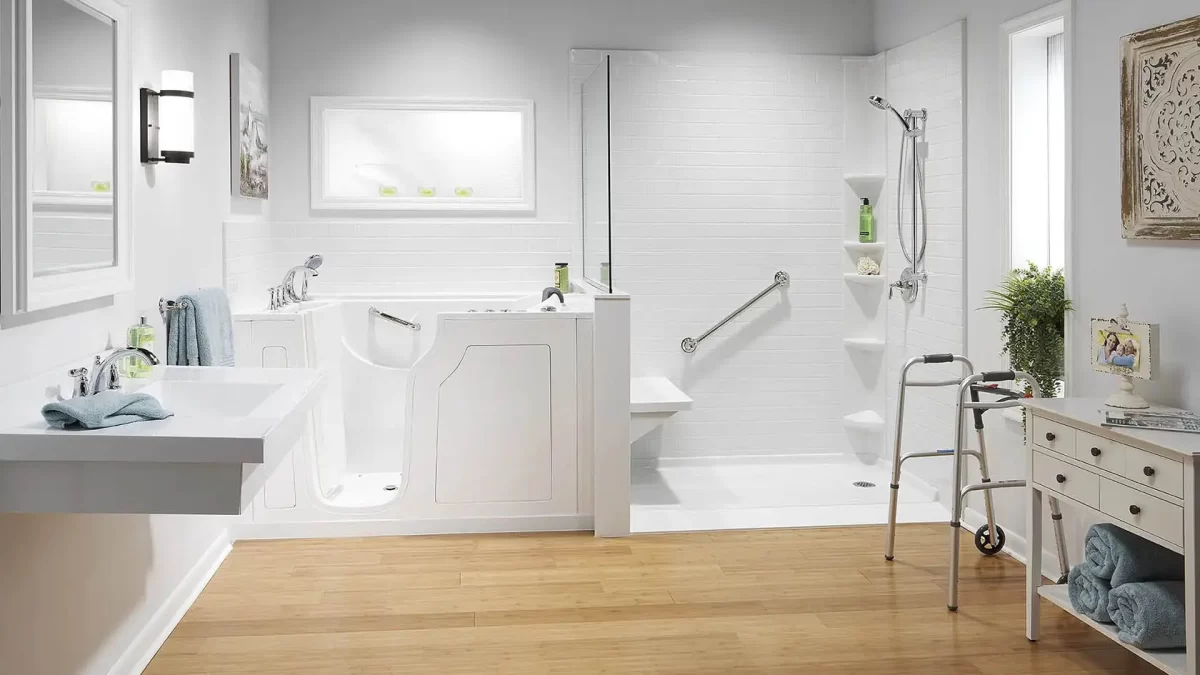
A well-planned, handicap-accessible bathroom turns careful, tiring routines into smoother, safer moments. The key isn’t buying the “most heavy-duty” products—it’s matching the right fixtures, clearances, and supports to real daily movements so bathing, toileting, and grooming feel natural again.
Start with the layout: clear, direct paths
- Room to turn and park: Ensure enough space to turn with a wheelchair or walker without bumping knees or elbows.
- Straight approaches: Aim toilets, vanities, and showers so transfers flow in a single, smooth line.
- Door upgrades: Swing-out doors or pocket doors reduce pinch points; lever handles beat round knobs for low-force opening.
Want quick ideas tailored to daily use? Explore our bathroom safety page.
Zero-threshold showers: the new standard
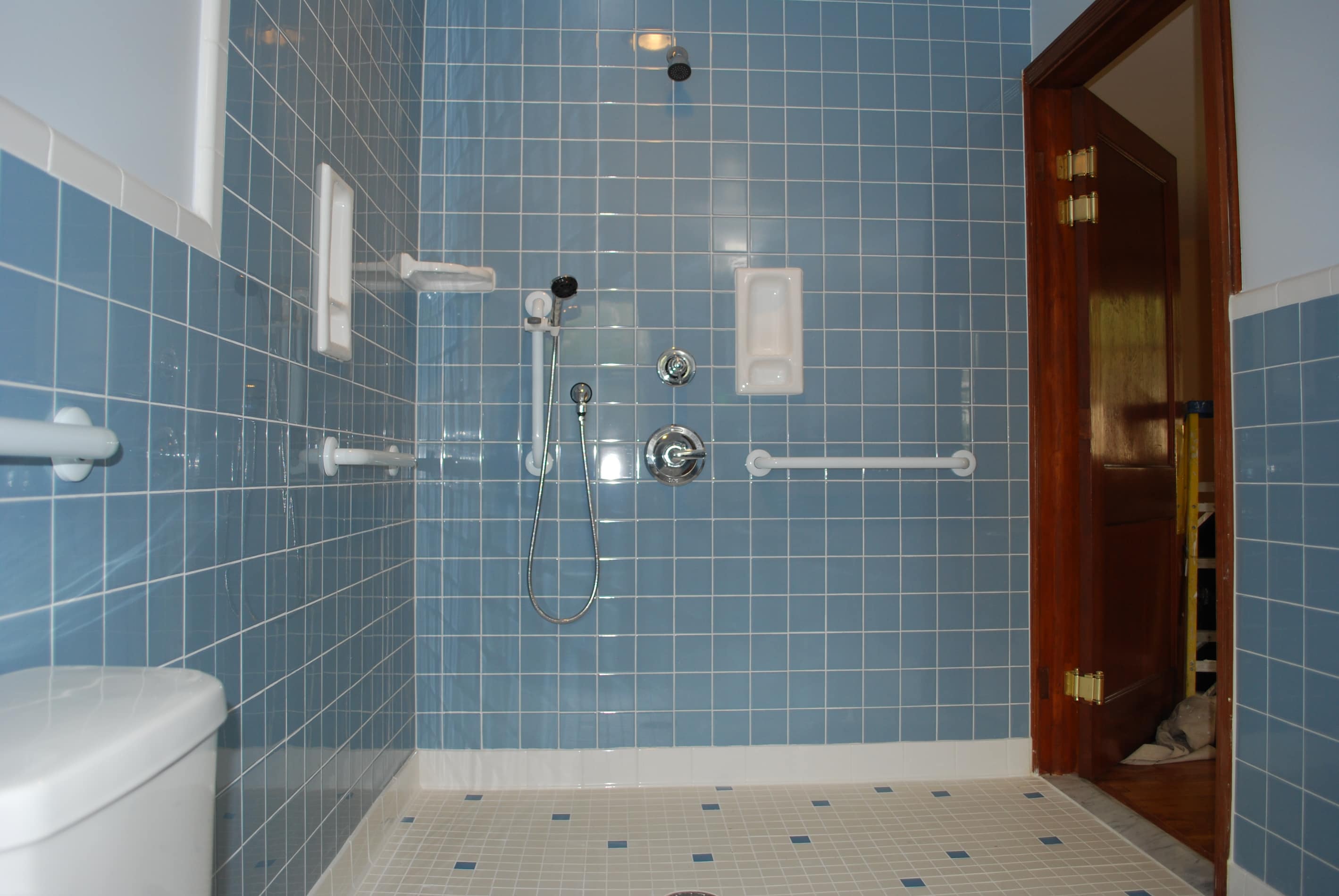
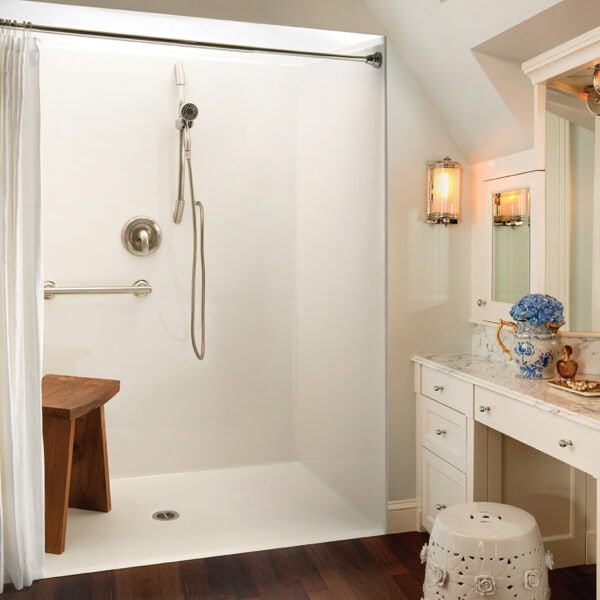
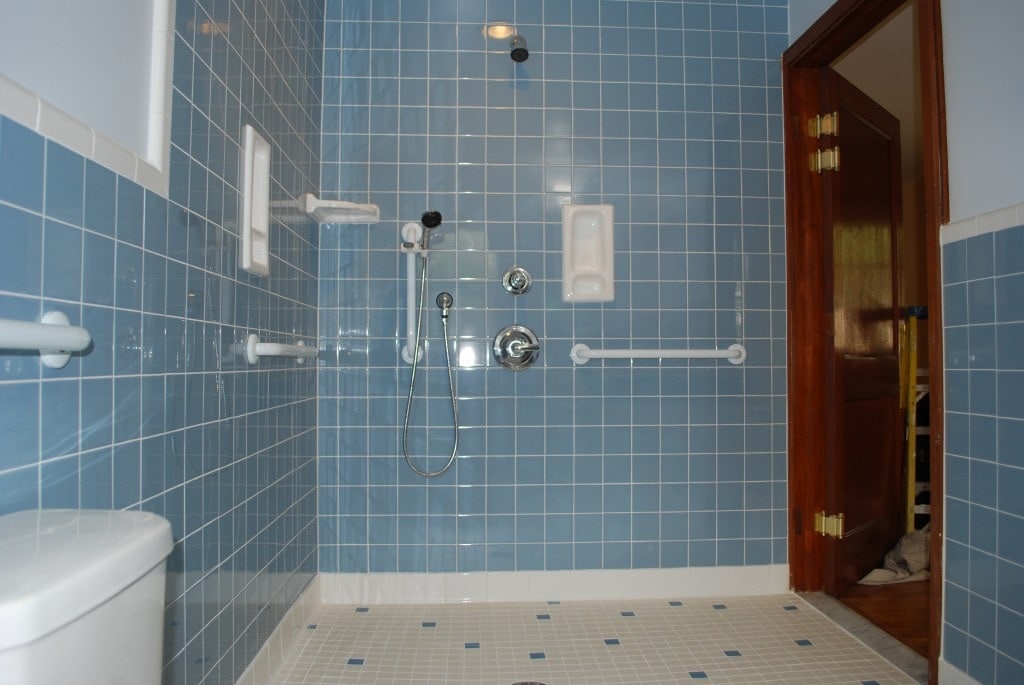
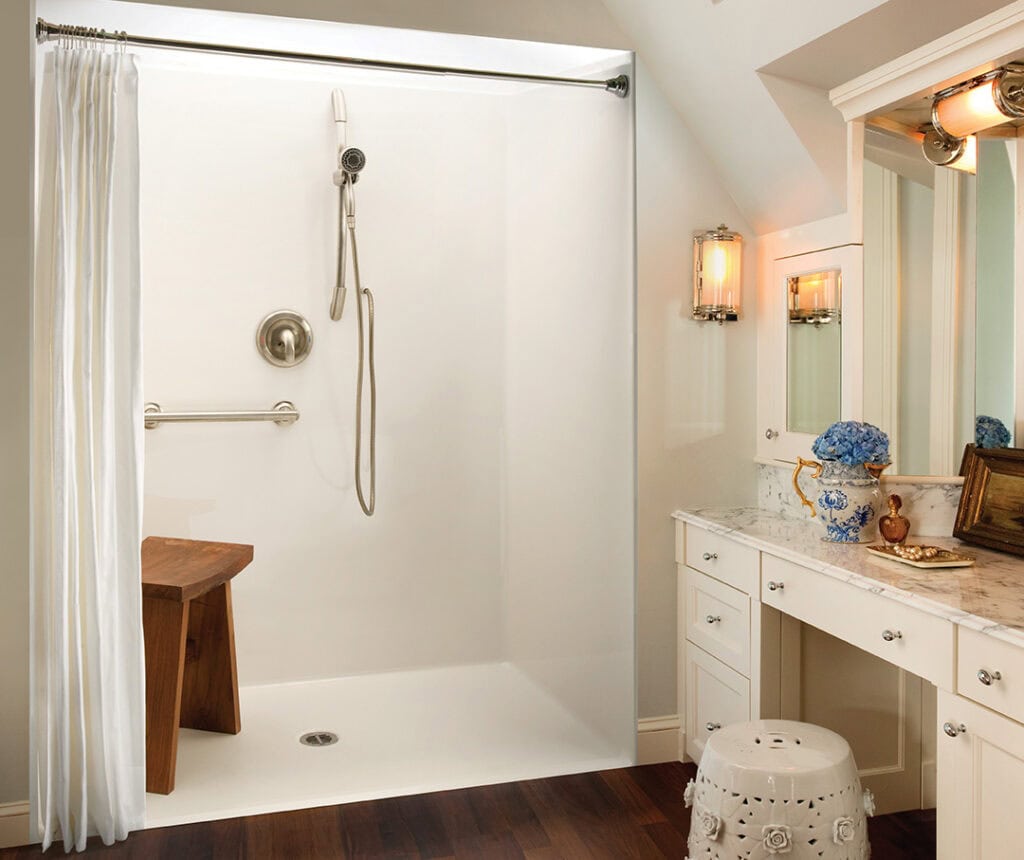
A zero-threshold shower removes the tripping lip and makes rolling or stepping in simpler. It’s a win for anyone with balance challenges—and for caregivers.
- Slope and drainage: The pan must pitch gently to a linear or center drain so water doesn’t escape.
- Size and entry: A wider opening simplifies rolling in and turning.
- Glass vs. curtain: Fixed glass keeps heat in and water contained; a curtain offers maximum entry width.
- Grab points: Place sturdy supports at the entry and along the long wall where slips are most likely to occur.
Seating that actually helps
- Fold-down shower seats: Provide a secure rest point without crowding the space when folded up.
- Bench height and depth: Size to your thigh length so feet can plant firmly without dangling.
- Transfer-friendly edges: A seat near the entry reduces the “first step” stress and gives a predictable place to land.
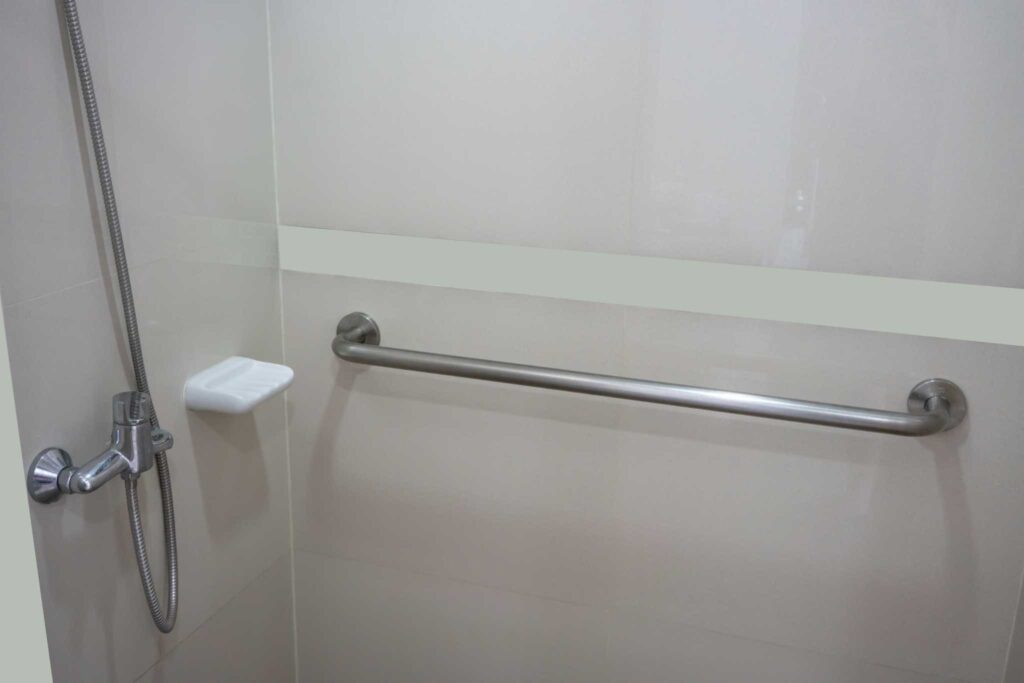
Grab bars: placement beats quantity
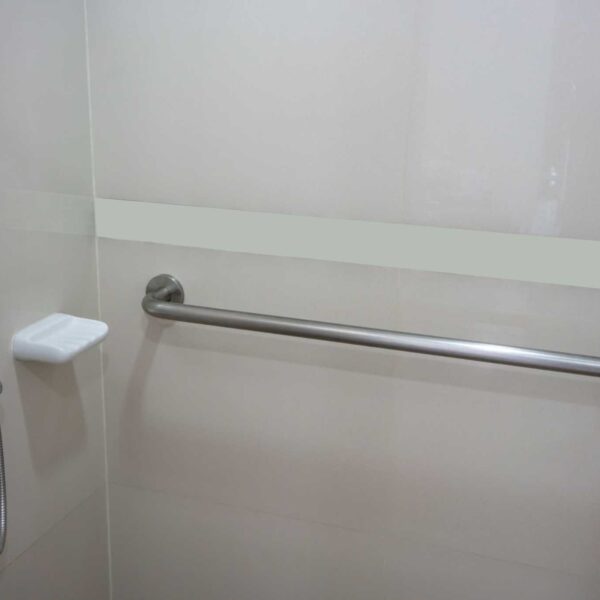
Any grab bar can look right—only correct placement makes it feel right. We set heights and angles around your shoulder range and transfer habits, so users feel secure and supported.
- Vertical entry bar at the shower threshold for sure footing.
- A diagonal bar along the long wall to meet the forearm during slips.
- Horizontal bar near the seat for push and repositioning.
- Toilet-side bar at a height that supports a smooth sit-to-stand.
See options here: grab bars.
Flooring that keeps its grip
- Slip-resistant surfaces: Look for textures that provide reliable grip and are easy to clean, giving homeowners peace of mind about safety and maintenance.
- Large-format tile with wide grout reduces joints yet maintains traction.
- Continuous plane: Keep floors level or gently sloped toward the shower to avoid toe stubs and caster catches.
Sinks and vanities: knees, reach, and splash
- Open knee space: A wall-hung sink or a shallow vanity provides knee space and footrests.
- Comfort faucet: Single-lever or touch-control faucets reduce strain; place them toward the front for shorter reach.
- Mirror height: Angled or lower mirrors make grooming easier from seated positions.
- Splash control: A slight front lip and a thoughtful faucet angle keep water from splashing onto the floor.
Toilets: small dimensions, big difference
- Comfort height: A slightly taller bowl eases the sit-to-stand transition.
- Clear lateral transfer space: Keep one side open and unobstructed.
- Support where you push: Sidewall bars or fold-down supports do more than a rear-only bar in tight rooms.
- Bidet seats: Gentle cleaning and warm air drying reduce twisting and reaching.
Handrails and short assists where you move most
Beyond bars in the wet zone, ADA-style handrails or short assist rails help at the bathroom entry, near steps to a sunken area, or along a tight hallway. A continuous grip path reduces “no support” gaps between the bedroom, hall, and bath. Explore options: handrails.
Lighting and visibility: see the support, avoid the glare
- Low-glare task lighting at the vanity and in the shower keeps contrast high without harsh reflections.
- Night pathway lights guide the route from bed to bath.
- High-contrast edges: Choose bar and rail finishes that stand out from the wall color for quick hand placement.
Ventilation and moisture control
- Quiet, strong exhaust fans help keep floors dry and reduce slip risk.
- Timed or humidity-sensing controls ensure the fan actually runs long enough to make a difference.
Smart controls and switches
- Large, flat switches or motion sensors are easier to use with limited dexterity.
- Thermostatic shower valves maintain a steady temperature and reduce fiddling.
- Outlets and charging for medical or hygiene devices should sit within easy reach—but away from direct water spray.
Planning the project: what to expect
- Walkthrough & goals – We map current routines, transfer points, and trouble spots.
- Measurements & clearances – Turning space, approach path, and reach ranges drive layout choices.
- Product fit – We select pans, doors/curtains, bars, seats, faucets, and flooring to match your daily use.
- Clean, code-aware installation – Proper blocking, waterproofing, and sealing keep everything solid and dry.
- Training & handoff – We review use and care, then make minor adjustments so the bathroom feels “dialed-in” day one.
If you’re coordinating multiple upgrades across the home, consider a phased approach to handicap-accessible remodeling.
Budget tips that don’t sacrifice safety
- Start with the high-impact trio: zero-threshold shower, correctly placed grab bars, and a comfort-height toilet.
- Keep door changes and lighting in scope; both pay off daily.
- Install hidden blocking now so future bars or seats mount cleanly without opening walls again.
- Choose surfaces you can clean easily; slippery floors cancel out good planning.
Signs it’s time to update the bathroom
- Near-falls stepping over the tub edge or on wet tile
- New reliance on a wheelchair, scooter, or walker
- Nighttime trips feel risky or exhausting
- Caregivers report awkward lifting or twisting
- You’re avoiding showers because transfers feel uncertain
Why homeowners choose CAPS Remodeling
- Right-sizing over one-size-fits-all: We install supports where your hands and feet actually land.
- Clean work, clear communication: Protected surfaces, tidy sites, and upfront pricing.
- Future-ready planning: We design for today while prepping for tomorrow’s needs.
FAQs
1) Do I need a complete remodel to get a safer bathroom?
Not always. Many homes see significant gains with a zero-threshold conversion, a few well-placed bars, and better lighting—done fast and clean.
2) Can you anchor grab bars into tile or fiberglass?
Yes. We locate studs or add approved blocking, use stainless fasteners, and seal penetrations to keep water out.
3) What’s better—a glass door or a curtain for accessibility?
Curtains often offer the widest opening; glass keeps warmth and water in. We’ll size and place them to fit your transfer style.
4) How do you prevent slippery floors?
We specify slip-resistant materials, add texture where it counts, and plan drainage so water goes to the drain—not your path.
5) Can this be part of a bigger home plan?
Absolutely. We can phase bathroom work with entries, hallways, and bedroom changes for a smooth, budget-friendly path to a safer home.

Introducing Kevin Olrich, Owner of CAPS Remodeling. As a trusted expert in the field of barrier free remodeling Kevin brings a compassionate approach to create safer, more comfortable, and independent living conditions for the elderly and disabled throughout the State of Michigan. His leadership and experience is at the core of how CAPS provides the best solutions to meet the unique needs of our customers and medical professionals.