The Low Maintenance and Temporary Solution for Wheelchair Accessibility
August 10, 2014
Being Able to Make Independant Transfers with a SureHands Ceiling Track Lift System
January 22, 2019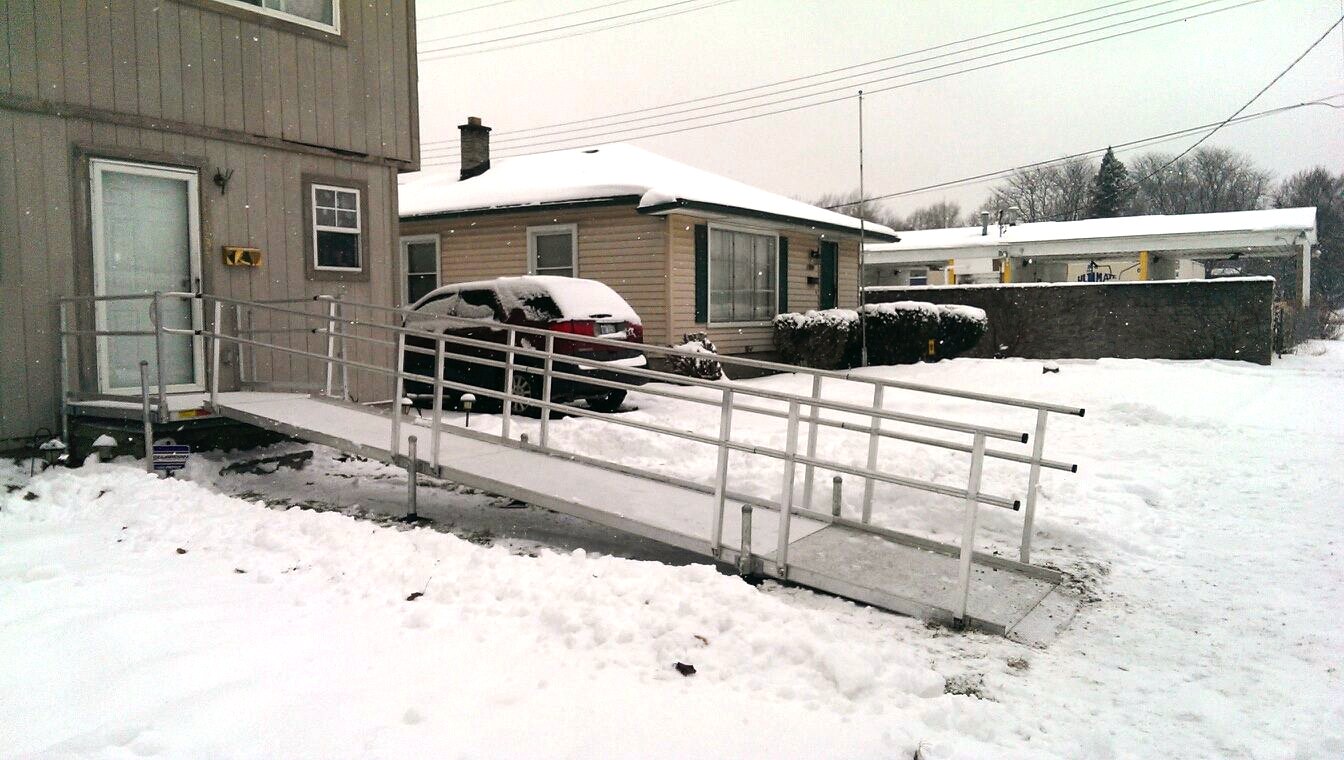
Winter Ramp Maintenance and Safety
Maintaining your aluminum ramp in the Michigan winter is really not much different than maintaining your sidewalks. The aluminum ramps are manufactured with a ribbed surface which under normal conditions provides great traction.
If the ribs fill with snow and ice, then the ramp like any other surface will become slippery. Be sure to keep your ramp free of snow by shoveling it. If it is light snow it helps to sweep the ramp, this prevents scrapes to the ramp.
Purchase extra-coarse, non-clumping cat litter at your local hardware store. Cat litter acts as additional traction on slippery surfaces and doesn’t leave the chalky residue behind like ice melt. When the snow melts in the spring, the pet litter can be swept or washed away.
If your ramp has already become built up with ice and snow, we recommend using magnesium chloride or calcium chloride to melt away the ice and snow. You can find this product at your local hardware store.
Wood ramps are the same as aluminum ramps when it comes to winter maintenance. Make sure it is free of snow, and if it is not then shovel it or put ice melt on the ramp. You can find ice melt at your local hardware store and purchase non-coarse ice melt so it does not damage your wooden ramp.
Give us a call today and speak to one of our expert aging-in-place specialists at CAPS Remodeling! We’ll be more than happy to provide you with an evaluation to determine the best way to move forward with your case.
FAQ
1. How should I remove snow and ice from my accessibility ramp without causing damage?
It’s important to clear snow and ice from your ramp as soon as possible to prevent slippery conditions. Use a plastic snow shovel or a thick-bristled push broom instead of metal shovels, since metal can scratch or damage the ramp surface. For stubborn ice, apply a de-icing agent that is safe for the ramp’s material—magnesium chloride is usually recommended for metal, wood, and composite ramps. Always avoid using rock salt or corrosive chemicals, as they can degrade the ramp over time.
2. What can I do to prevent slips and falls on the ramp during freezing weather?
To enhance safety, consider installing anti-slip mats, strips, or treads specifically designed for ramps. These provide extra traction in slippery conditions. Regularly check for any slippery spots and reapply anti-slip coatings if needed. Using sand or cat litter can also improve grip temporarily when icy weather strikes. Make sure to keep the ramp well-lit during darker winter evenings so users can see any potential hazards clearly.
3. Are there specific ramp materials or features that make winter maintenance easier?
Ramps made from aluminum or composite materials tend to be more resistant to corrosion and easier to clear than wood, which can absorb moisture and become slippery. Ramps with mesh surfaces allow snow and water to drain through, reducing buildup. Some homeowners consider heated ramp systems or heat tape under mats to keep surfaces clear of ice, but these require specialized installation.
4. How often should I inspect my ramp during the winter months, and what should I look for?
Inspect your ramp at least once a week in winter, or more frequently after snow or ice storms. Look for loose hardware, surface cracks, worn-out anti-slip features, or buildup of snow and debris. Don’t forget to check handrails for stability and make sure all drainage points are unblocked so melting snow doesn’t refreeze on the ramp. Address any repairs or adjustments promptly to ensure continued safety.
5. What are the best de-icing practices that are safe for people, pets, and my ramp?
Choose non-corrosive, pet-safe de-icers—like those containing magnesium chloride—instead of standard salts, which can harm both the ramp and any pets that might walk across it. Apply de-icer before storms for best results. After each use, sweep away any excess to prevent residues that could attract dirt or moisture and cause future slip hazards. Always read and follow the manufacturer’s instructions for both your ramp and any snow-melt product you use.

Introducing Kevin Olrich, Owner of CAPS Remodeling. As a trusted expert in the field of barrier free remodeling Kevin brings a compassionate approach to create safer, more comfortable, and independent living conditions for the elderly and disabled throughout the State of Michigan. His leadership and experience is at the core of how CAPS provides the best solutions to meet the unique needs of our customers and medical professionals.