Making Your Bathroom Handicap Accessible: Costs, Layouts & Must-Have Upgrades
January 30, 2026
Wheelchair Ramp Installation in Sterling Heights, MI: Safer Entries, Smoother Daily Living
February 19, 2026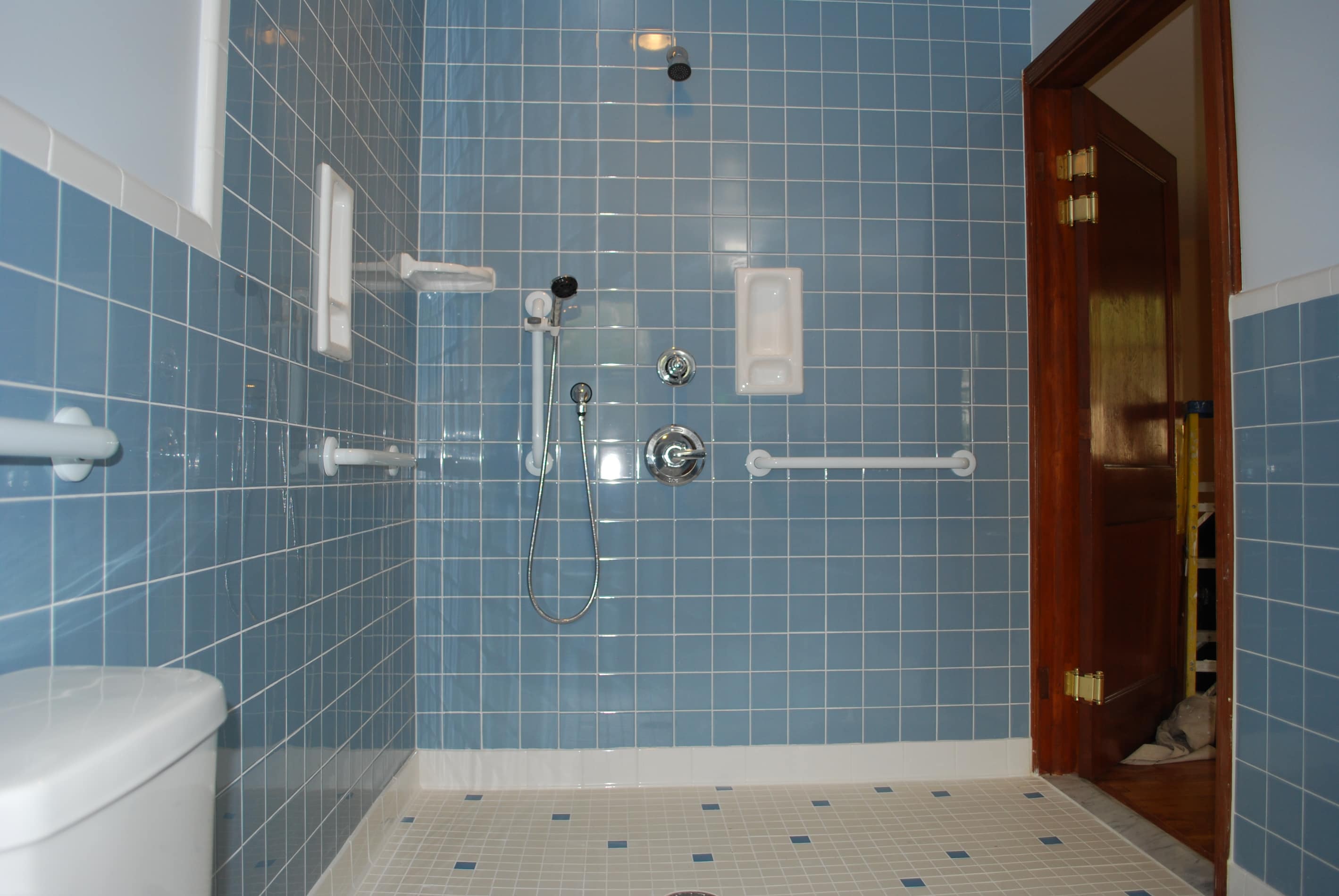
Creating a bathroom that supports safety, comfort, and everyday independence doesn’t mean giving up style. If you’re living in Sterling Heights, MI, you likely want a space that’s easy to use today and adaptable for the future—whether you’re planning ahead, supporting a loved one, or preparing a home to age in place. This guide walks you through accessible bathroom remodeling options that enhance functionality, reduce risk, and look great in any home.
From zero-threshold showers to smart storage and thoughtful lighting, the right upgrades remove obstacles and simplify daily routines. When done right, accessibility is nearly invisible—it’s built into the layout, surfaces, and fixtures so that moving around the room feels natural and secure.
If you’re just getting started or ready to plan a full remodel, CAPS Remodeling can help you design a space tailored to your needs and style. For a deeper dive into specific bathroom safety solutions, explore accessible bathroom remodeling options from CAPS Remodeling.
Why Accessible Bathroom Remodeling Matters
Bathrooms are the most slip-prone rooms in a home. Water, cluttered layouts, and tight corners create risk even for active adults. For anyone using a wheelchair, walker, or cane—or assisting a family member—standard bathrooms often fall short. Accessible bathroom remodeling addresses the pain points:
-
Smooth entries: Widened doorways and low or zero thresholds prevent tripping and make it easier for mobility devices to access.
-
Safe transfers: Properly placed grab bars and sturdy, weight-rated fixtures support confident movement.
-
Slip-resistant surfaces: Floor and shower materials with a higher static coefficient of friction help reduce falls.
-
Comfortable reach: Raised or comfort-height toilets, adjusted vanity heights, and reachable controls reduce strain.
-
Clear navigation: Open turning space and simplified layouts help you move freely without tight pivots.
In a city like Sterling Heights, many homes have bathrooms built before accessibility was a common design priority. Upgrading isn’t just about code—it’s about daily ease, long-term independence, and the peace of mind that comes with a safer space.
Sterling Heights, MI: Local Considerations That Shape the Design
Design choices benefit from the realities of Southeast Michigan living:
-
Winter conditions: Snow and ice mean more water tracked indoors. Prioritize high-traction flooring and effective bath mats to reduce slips.
-
Older housing stock: Many homes have modest bathroom footprints. Smart layout, wall-hung fixtures, and pocket doors can unlock precious inches.
-
Basement baths: If you’re adding a lower-level bathroom, consider sump-friendly plumbing and moisture-resistant finishes that withstand humidity fluctuations.
When accessibility is planned with these local factors in mind, you get a space that’s safer year-round and easier to maintain.
Core Elements of an Accessible Bathroom (What Really Changes Day-to-Day)
1) Entrances and Doorways
-
Clear width: Aim for doorways that allow mobility devices to pass without scraping knuckles or frames.
-
Door swings: Consider out-swing or pocket doors to free up floor area inside the bath.
-
Levers over knobs: Lever handles are easier to operate with reduced grip strength or wet hands.
2) Floor Plan and Turning Space
-
Open layouts improve navigation and reduce trip points.
-
If a full re-layout isn’t feasible, micro-optimizations—like shifting the vanity or selecting a wall-hung sink—can create more maneuvering space.
-
Keep pathways straight and uncluttered, with towel bars and accessories placed out of the travel lane.
3) Shower Access and Safety
-
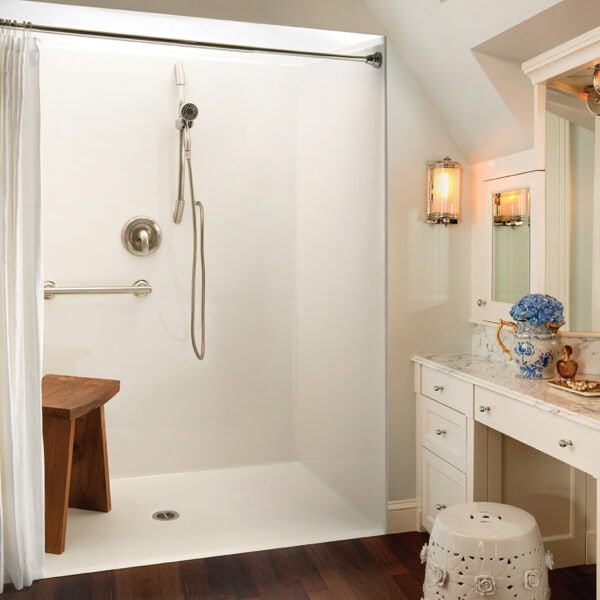
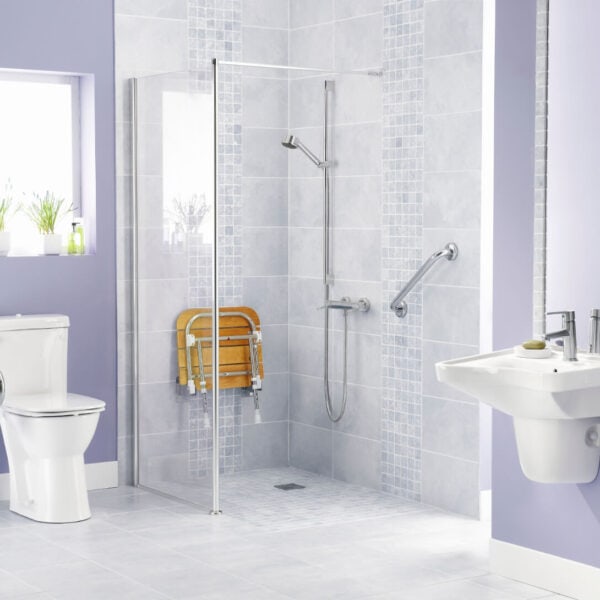
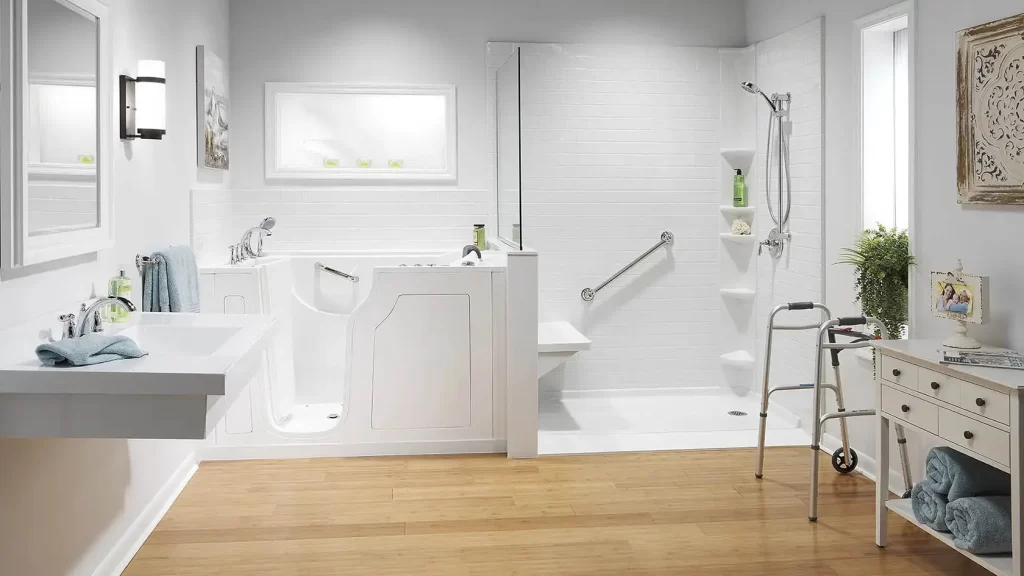
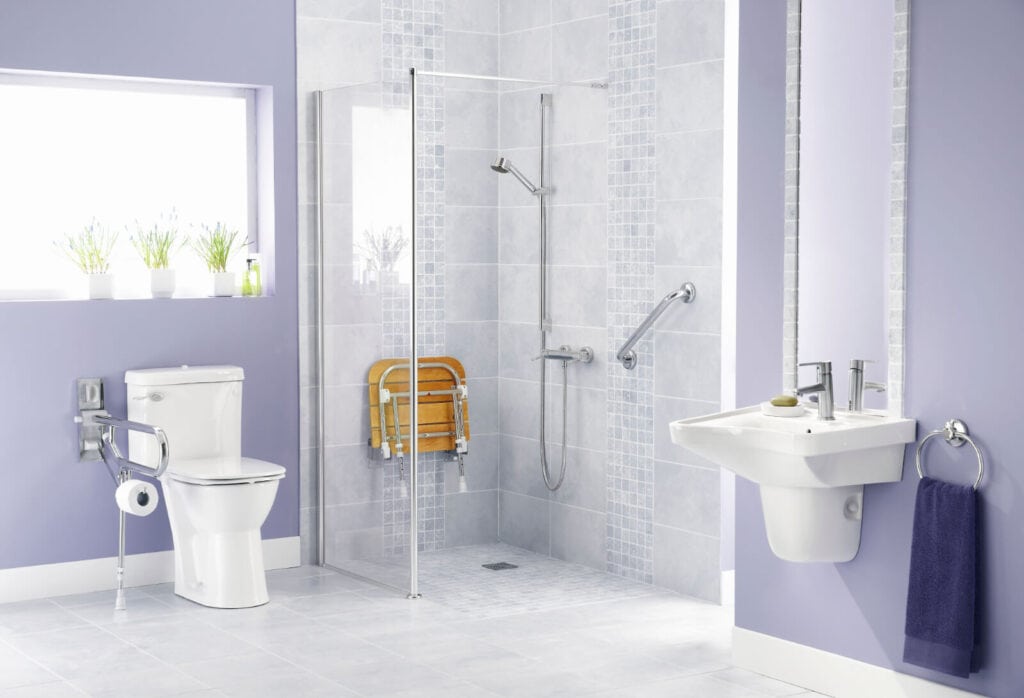
Zero-threshold showers eliminate step-over, making entries effortless and safer.
-
Use linear drains to gently slope the floor, preventing water pooling.
-
A fold-down seat or built-in bench supports seated bathing and caregiver assistance if needed.
-
Specify handheld showerheads on an adjustable slide bar for flexible use at any height.
-
Place at least one vertical grab bar at the entry (for balance) and one horizontal bar along the long wall (for transfers).
4) Bathing Alternatives (If You Prefer a Tub)
-
Consider a soaking tub with a wide deck and textured bottom.
-
Add sidewall bars and an offset filler to avoid reaching across hot water.
-
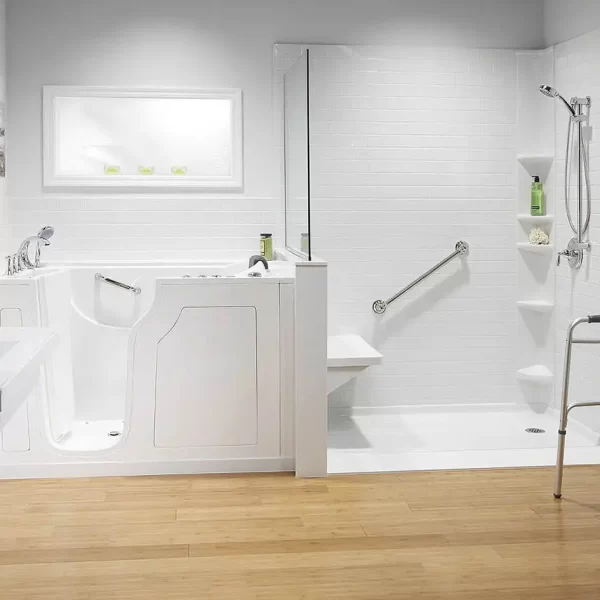
For households that truly need tub access, walk-in tubs can be a fit, though check clearances and hot-water capacity.
5) Toilet Comfort and Transfers
-
Comfort-height toilets reduce knee and hip strain.
-
Side and rear grab bars support standing and seated transfers—anchors must be installed to proper blocking, not just drywall.
-
If space is tight, a wall-hung toilet with an in-wall carrier opens valuable inches for foot placement.
6) Vanities, Sinks, and Storage
-
Open-knee vanities or wall-hung sinks support roll-under access.
-
Choose rounded corners to prevent bumps, and use tilt mirrors for seated visibility.
-
Plan grab-reachable storage: frequently used items between mid-thigh and shoulder height, with soft-close hardware that’s quiet and easy to operate.
7) Lighting and Controls
-
Layer ambient, task, and night-lighting to reduce shadows and glare.
-
Use rocker switches, motion-sensing lights, or illuminated controls for better visibility.
-
Consider anti-scald mixing valves and thermostatic controls for stable temperatures.
8) Surfaces and Finishes
-
Slip-resistant porcelain tile or luxury vinyl tile (LVT) can deliver traction, durability, and style.
-
In showers, specify small-format floor tile (mosaic) for extra grout lines and better grip.
-
Choose contrasting colors for edges and controls to make visual cues clear without looking clinical.
The “Invisible” Upgrades That Make a Big Difference
Some of the most valuable improvements are hidden behind the wall or beneath the surface:
-
Blocking for grab bars: Install solid backing anywhere a future bar might go—by the toilet, in the shower, and near the entry.
-
Lower-maintenance waterproofing: Sheet membranes and integrated pans reduce leaks and the risk of mildew.
-
Drain and ventilation planning: A well-sized fan and smart duct routing keep the room dry and odors in check.
-
Heated floors: Warm feet mean better balance and comfort, especially on winter mornings in Sterling Heights.
These details are easy to overlook, but they’re what make the bathroom feel stable, quiet, and built to last.
Choosing the Right Grab Bars (Strength, Placement, and Style)
Modern grab bars come in finishes and profiles that match your fixtures—brushed nickel, matte black, polished chrome—so safety looks intentional, not tacked on.
-
Sizing: 24″ and 36″ bars are common, but mix sizes to match hand reach and wall length.
-
Grip profile: A slightly textured or knurled surface provides a surer hold with wet hands.
-
Placement:
-
Shower entry: Vertical bar near the opening for balance.
-
Long wall: Horizontal bar for stability while turning or seated.
-
Toilet: Side and rear bars for sit-to-stand support.
-
-
Mounting: Bars must be anchored into solid blocking—this is non-negotiable for safety.
When you choose grab bars during an accessible bathroom remodeling project, you’re not just buying hardware—you’re installing confidence into the room.
Zero-Threshold Showers: The Centerpiece of Accessibility
A well-designed curbless shower becomes the heart of the bathroom:
-
Continuous flooring: No steps mean walkers and wheelchairs can pass without snagging.
-
Single-plane slope to a linear drain keeps water where it belongs.
-
Glass panels with wide openings maintain sight lines and reduce visual barriers.
-
Bench or seat options support seated use and caregiver assistance.
-
A handheld sprayer paired with a fixed head offers both flexibility and spa-like comfort.
Pair a curbless shower with slip-resistant tile and a clear path from the doorway, and you’ll have a bathing area that’s open, calm, and easier to maintain.
The Right Flooring: Grip Without the Gritty Look
Great traction can still look sleek:
-
Porcelain tile with a matte finish offers durability and a design range.
-
Mosaic sheets in showers add grip through extra grout lines.
-
Quality LVT can be warmer underfoot and forgiving with minor drops.
-
Avoid high-gloss, polished surfaces that become slick when wet.
-
Use contrasting thresholds or color bands to signal changes in level.
Storage That Helps You Move (Instead of Getting in the Way)
Clutter is the enemy of safe movement. Smart storage keeps the room tidy and reachable:
-
Built-in wall recesses save floor space.
-
Pull-outs and shallow drawers reduce bending and blind reaching.
-
Open shelves by the shower hold towels without door swings.
-
Place the most-used items between mid-thigh and shoulder height.
With storage designed around how you move, you’ll reduce unnecessary steps and keep the floor clear—two wins for daily safety.
Fixtures and Faucets: Small Touches, Big Ease
-
Single-lever faucets are easier to control with limited dexterity.
-
Touch or sensor options reduce twisting and keep handles cleaner.
-
Anti-scald valves provide a stable water temperature.
-
Pressure-balanced controls prevent sudden shocks when other fixtures are in use.
These small touches make routines feel smoother, especially for anyone with joint pain or reduced grip strength.
Lighting for Confidence (Without Harsh Glare)
Seeing edges clearly is half the battle:
-
Even ambient lighting to avoid deep shadows.
-
Task lighting at the vanity for grooming.
-
Night lights or low-level toe-kick LEDs to guide late-night trips.
-
Use frosted diffusers and warm color temperatures for softer light that still accurately renders skin tones.
Project Paths: From Quick Upgrades to Full Remodels
Not every home needs a full gut. Here are staged approaches that work well in Sterling Heights homes.
Quick Safety Wins (Good for Tight Timelines)
-
Install grab bars with proper blocking.
-
Swap to comfort-height toilet and lever handles.
-
Add slip-resistant mats and brighter bulbs.
-
Adjust the shower with a handheld sprayer and slide bar.
Mid-Range Refresh (Function + Style)
-
Convert a tub to a curbless shower.
-
Replace flooring with high-traction tile or quality LVT.
-
Upgrade vanity for roll-under access.
-
Re-route lighting and add dimmer controls.
Full Transformation (Layout + Infrastructure)
-
Re-frame walls to widen the door and add blocking.
-
Re-route plumbing for linear drain and curbless entry.
-
Install in-wall carriers for wall-hung fixtures.
-
Optimize ventilation, insulation, and waterproofing for longevity.
Each path can be tailored to budget, timeline, and the specific accessibility needs in your home.
Cost Drivers: What Influences the Budget the Most
-
Structural changes: Moving walls or shifting doorways adds framing and finishing work.
-
Plumbing relocation: New drains, lines, or in-floor trenching for linear drains increases labor.
-
Tile selection: Large-format tile can be efficient on walls; mosaics take longer to set but add grip.
-
Custom glass: Oversized panels and low-iron options raise material cost but enhance openness.
-
Fixture choice: Wall-hung carriers, thermostatic controls, and designer finishes add premium value.
A good design process clarifies what’s essential to safety and daily use, then layers in the style decisions that make the room feel personal.
Planning the Remodel: Steps That Keep It Smooth
-
Assessment
Begin with a detailed conversation about mobility, reach, balance, and any caregiver involvement. If you anticipate changing needs, design for adjustability now. -
Design + Selections
Finalize layout, blocking plan, and material palette. Confirm clearances for mobility devices and seated use. Select fixtures and surfaces with documented traction and easy maintenance. -
Permitting + Prep
Coordinate necessary permits. Protect adjacent rooms, plan temporary bathing solutions, and map dust control paths. -
Build
Demolition, framing, blocking, plumbing, electrical, waterproofing, tile, and finish work—all sequenced to ensure a dry, sturdy envelope before surfaces go in. -
Walkthrough + Adjustments
Test grab bar locations, bench height, shower controls, lighting levels, and storage reach. Make small tweaks so everything feels intuitive.
Throughout the process, CAPS Remodeling keeps the site clean, the schedule organized, and communication clear—so you know what’s happening at every step. For solutions specific to bathroom safety, see our page on accessible bathroom remodeling.
Sterling Heights Style Notes: Make It Yours
Accessibility can be beautiful. Some design touches that work well in local homes:
-
Warm neutrals and wood tones to complement Midwestern light.
-
Matte black or brushed nickel hardware for a modern, grounded look.
-
Subtle color contrast at the edges (vanity top vs. floor) to enhance depth perception.
-
Textured shower floors paired with sleek, large-format wall tile to balance traction and clean lines.
-
Built-in niches with accent tile bands to keep products organized and within reach.
The result is a bath that reads as designer-forward, not clinical, while still delivering the function you need.
Maintenance Tips That Preserve Safety
-
Squeegee shower walls and glass to reduce soap film and maintain traction.
-
Use neutral pH cleaners compatible with your tile and grout sealer.
-
Replace bath mats at the first sign of curling or wear.
-
Test and maintain caulk lines and fan performance seasonally.
-
Keep pathways uncluttered—a clear floor is the simplest safety upgrade of all.
These habits extend the life of your finishes and keep surfaces performing as designed.
Key Benefits at a Glance
| Benefit | What It Means for You | Everyday Impact |
|---|---|---|
| Safer entries | Zero-threshold shower & wider doorways | Fewer trip hazards and easier mobility |
| Confident transfers | Proper grab bar placement & blocking | Stable moves in/out of the shower and at the toilet |
| Better traction | Slip-resistant flooring & mosaic shower tile | Reduced risk even when surfaces are wet |
| Efficient layout | Open turning radius & clear sight lines | Smoother navigation with less back-tracking |
| Comfortable reach | Adjusted heights & lever controls | Less strain on joints and better control |
Real-World Scenarios: How Accessibility Pays Off
-
Aging in place: You’re planning to stay in your Sterling Heights home. A curbless shower, comfort-height toilet, and reachable storage guarantee the bath remains friendly for the next decade.
-
Post-surgery recovery: After a knee or hip procedure, grab bars and a bench make bathing possible without overexertion.
-
Wheelchair use: An open plan with a roll-under vanity and a handheld shower turns the bath into a space for independence, not a barrier.
-
Caregiving support: When a spouse or adult child helps with bathing, clearing the area around the shower, and thoughtful bar placement, it reduces strain for both people.
In each case, accessible design lowers frustration and keeps your routines predictable and safe.
Materials Checklist (A Handy Starting Point)
-
Flooring: Matte porcelain or high-quality LVT with a slip-resistant rating
-
Shower floor: Mosaic tile for grip + linear drain
-
Walls: Large-format porcelain or ceramic tile with sealed grout
-
Glass: Fixed panel + wide opening, minimal framing
-
Fixtures: Single-lever faucets, handheld shower on slide bar
-
Toilet: Comfort-height or wall-hung with in-wall carrier
-
Vanity: Wall-hung or open-knee design, rounded corners
-
Hardware: Grab bars (mixed lengths), lever door handles
-
Lighting: Ambient + task + night-light layers, dimmers
-
Ventilation: Quiet, efficient fan with proper ducting
Use this as a conversation starter with your remodeler to align on priorities and budget.
Common Mistakes to Avoid
-
Skipping blocking for future grab bars—retrofitting later is harder and less precise.
-
Glossy floor tile—looks good, but treacherous when wet.
-
Overcrowding the plan with furniture-style vanities that shrink the turning radius.
-
Single light source—shadows hide edges and create surprise steps.
-
Controls out of reach—place water controls where you can reach them before stepping in.
A well-planned, accessible bathroom remodeling project avoids these pitfalls and keeps the focus on how you’ll actually use the room every day.
Working With CAPS Remodeling
With CAPS Remodeling, you get a team focused on safety, function, and design that suits your taste. We help you:
-
Map your daily routine into the plan so the design supports real life.
-
Select finishes that look great and perform in wet conditions.
-
Coordinate layout, ventilation, and lighting to eliminate friction.
-
Build with clean job sites, reliable timelines, and clear communication.
Ready to start? Learn more about bathroom safety solutions and accessible bathroom remodeling options, or reach out to discuss your Sterling Heights project.
FAQ: Accessible Bathroom Remodeling in Sterling Heights, MI
1) How long does an accessible bathroom remodel take?
Timelines vary by scope. A quick safety refresh (grab bars, comfort-height toilet, handheld shower) can be completed relatively fast, while a full curbless shower conversion with plumbing changes and custom glass takes longer. The schedule depends on design complexity, material lead times, and any structural changes needed in your Sterling Heights home.
2) Do I have to replace my tub to get better accessibility?
Not always. If bathing in a tub matters, pairing a textured tub floor with grab bars and a handheld sprayer can help. But for most mobility needs, a zero-threshold shower provides the safest, easiest entry and the smoothest transfers.
3) What flooring is safest for bathrooms?
Look for matte porcelain tile or high-quality LVT with good traction. In showers, choose mosaic tile to increase grip. Avoid polished surfaces that become slick when wet.
4) Can accessibility still look stylish?
Absolutely. Today’s grab bars, seats, and fixtures come in finishes that coordinate with your design—matte black, brushed nickel, chrome—so safety features blend into the room. Thoughtful layout, contrasting edges, and clean lines create a space that feels modern and inviting.
5) Will these upgrades add value to my home?
Accessibility features often appeal to a wide range of buyers who want safer, future-ready spaces. A well-executed accessible bathroom remodeling project can enhance daily living now while making your Sterling Heights home more attractive when it’s time to sell.

Introducing Kevin Olrich, Owner of CAPS Remodeling. As a trusted expert in the field of barrier free remodeling Kevin brings a compassionate approach to create safer, more comfortable, and independent living conditions for the elderly and disabled throughout the State of Michigan. His leadership and experience is at the core of how CAPS provides the best solutions to meet the unique needs of our customers and medical professionals.