
A home elevator is a residential lift built to move people (and sometimes goods) between floors safely and with minimal fuss. The right choice can simplify daily life, improve accessibility, and add lasting value to your property. This guide walks through the main home elevator types—hydraulic, traction, pneumatic (vacuum), shaftless, MRL, and through-the-floor—how each operates, and which homes each type fits best. Many homeowners are unsure about 2025 price expectations, retrofit complexity, and must-have safety features; this article lays out realistic cost ranges, step-by-step installation stages, and practical smart-home and safety integrations. Read on to match elevator types to your structural constraints, understand the cost drivers, prioritize accessibility and energy-efficiency features, and compare how leading manufacturers differ in product focus and service. The content is organized into clear sections: types and comparisons, a 2025 price guide with component breakdowns, essential safety and design considerations, brand-selection tips, the installation workflow, and the accessibility and resale implications of adding an elevator to your home.
What Are the Different Types of Home Elevators and Which One Is Right for You?

Home elevators differ mainly by drive system, required footprint, and how easy they are to retrofit. Each type trades space, cost, and ride quality in different ways. Hydraulic elevators lift the cab with a piston and hydraulic fluid; they offer smooth motion and strong load capacity but may need a pit or machine room depending on the model. Traction elevators use cables and counterweights for efficient travel and higher speeds, usually requiring a hoistway and sometimes a machine room, making them reliable for multi-stop installs. Pneumatic (vacuum) elevators move a transparent cylinder using air-pressure differences; they’re shaftless and pit-free, so they’re compact retrofit options for tight urban homes. Shaftless and MRL (machine-room-less) designs reduce footprint by removing a separate machine room; through-the-floor lifts are compact, single-stop solutions for short vertical runs. Understanding these mechanics makes it easier to match an elevator to your home’s constraints—details follow in the comparison table and subsections below.

This technical comparison highlights the attributes that matter most—footprint, pit requirement, machine room, typical cost range, noise level, and speed—so you can quickly see which type fits a retrofit or new-build scenario.
| Elevator Type | Footprint / Space | Pit Required | Machine Room | Typical Cost Range (2025) | Noise Level | Typical Speed |
|---|---|---|---|---|---|---|
| Shaftless | Minimal footprint, flexible placement | No | No | $15k–$25k | Low | 20–40 ft/min |
| Hydraulic | Moderate footprint, requires vertical space | Sometimes | Sometimes | $25k–$50k | Low–Medium | 20–40 ft/min |
| Traction | Larger hoistway, multi-stop capable | Usually | Sometimes (or MRL) | $25k–70k | Low | 40–100 ft/min |
| Pneumatic (vacuum) | Very compact, circular cab | No | No | $35k–60k | Very Low | ~20–30 ft/min |
| MRL (Machine-Room-Less) | Compact hoistway, efficient | Varies | No | $30k–85k | Low | 30–80 ft/min |
The table shows practical trade-offs: shaftless and pneumatic models work well in tight retrofits, hydraulic and MRL designs handle heavier loads or multiple stops, and traction systems offer higher speeds for homes with several floors. The next section unpacks mechanical differences and gives site examples to help you pick the best fit for common home layouts.
How Do Hydraulic, Traction, Pneumatic, Shaftless, and MRL Elevators Compare?
Hydraulic elevators lift the cab with a fluid-driven piston, delivering smooth starts and stops and good load capacity—a solid choice for heavier loads and two- to three-stop residential installs. Traction elevators use ropes and counterweights; they’re more efficient on longer runs and offer faster travel, which makes them suited to new builds with multiple floors. Pneumatic vacuum elevators run on air-pressure differentials to move a transparent cylinder and excel where a hoistway or pit isn’t possible. Shaftless and MRL systems save space by integrating the drive into the hoistway or eliminating a separate machine room, often cutting installation time and structural work. Each system brings different maintenance needs and structural requirements, so match the mechanics to your intended load, travel distance, and retrofit limits when choosing a residential elevator.
What Are the Pros and Cons of Each Home Elevator Type?
Every elevator type has trade-offs that affect upfront cost, ongoing maintenance, and everyday usability. Hydraulic systems deliver a smooth ride and strong capacity but may require room for hydraulic equipment and periodic fluid checks. Traction elevators are energy-efficient at higher speeds and on longer shafts yet usually need a larger hoistway and routine rope inspections. Pneumatic vacuum lifts avoid pits and heavy hoistways and install quickly with minimal structural impact, but they generally carry lower maximum loads and offer fewer finish options. Shaftless and MRL units reduce space needs and simplify retrofits yet can limit cab size or customization compared with a full hoistway system. Weigh these pros and cons against your priorities—budget, aesthetics, load needs, and maintenance access—to narrow your shortlist; the cost section that follows shows how these choices affect 2025 pricing.
- Check site constraints like available shaft area or required pit depth.
- Prioritize load capacity if you’ll use a wheelchair or move heavy items often.
- Match desired cab finishes to retrofit complexity and budget.
- Confirm long-term service access and local maintenance availability.
Use this checklist as you move into the detailed cost analysis, where component breakdowns reveal the true ownership expense.
How Much Do Home Elevators Cost in 2025? A Complete Residential Elevator Price Guide
Installed prices in 2025 vary widely depending on elevator type, customization, structural work, and local labor. Unit prices typically range from $15k to $70k by mechanism and finish, but installation, site prep, electrical upgrades, permits, and custom cabs can double or otherwise increase total project cost. Primary cost drivers include the elevator unit, hoistway or shaft construction, pit excavation or reinforcement, electrical service and emergency power, finish level, and local permitting and inspection fees. A transparent breakdown of these components makes budgeting realistic; the table below gives typical component ranges so you can compare bids and forecast a practical budget.
| Cost Component | Typical Range | Notes |
|---|---|---|
| Elevator unit (base model) | $15,000–$70,000 | Varies by type and capacity |
| Installation & site prep | $5,000–$30,000 | Includes hoistway, pit, structural work |
| Electrical & controls | $1,500–$10,000 | Dedicated circuits, emergency power |
| Custom finishes & cab upgrades | $2,000–$25,000 | Glass, wood, custom fixtures |
| Permits & inspections | $500–$4,000 | Local code and inspection costs |
| Annual maintenance/service | $300–$1,200/year | Depends on service agreement |
This component view makes it clear the elevator unit is just part of the bill—site conditions and finishes often push the final price higher. The next subsection summarizes average unit price ranges by elevator type and shows examples of base versus fully customized builds.
What Are the Average Prices by Elevator Type?
Average 2025 price bands reflect manufacturing trends and inflationary pressures. Shaftless and pneumatic units tend to sit at the lower-to-mid end, hydraulic and MRL systems occupy the midrange, and high-end traction installations with luxury finishes reach the top of the scale. Typical ranges include: through-the-floor single-stop lifts roughly $15k–$30k installed, pneumatic vacuum elevators $35k–$60k, shaftless modular systems $15k–$25k, hydraulic residential elevators $25k–$50k, MRL units $30k–$85k, and customized luxury traction systems $60k–$100k+. Base models usually include standard cab finishes and limited site work; fully customized installs—glass cabs, bespoke trim, extensive structural changes—can raise costs substantially. These bands help set realistic expectations before you request certified quotes.
Remember: the factors discussed below can dramatically change any estimate, so use these ranges as starting points, not guarantees.
Which Factors Influence Total Home Elevator Costs?
Several variables materially affect the final price: the number of stops and vertical travel distance, whether a pit or hoistway is required, structural reinforcement needs, electrical upgrades, finish level, local labor rates, and permitting complexity. Retrofitting into a finished home may require wall removal, beam work, or concrete cutting that significantly increases site prep. Electrical needs—such as a dedicated 220V circuit and battery backup or generator tie-in—may require a panel upgrade. Custom cab materials and control panels raise unit cost, while extended warranties and service contracts increase predictable annual expenses. Investing in energy-efficient drives, remote diagnostics, and predictive maintenance can raise upfront cost but often reduces long-term ownership expense through fewer breakdowns and lower service bills.
- More vertical travel (extra floors) increases materials and labor.
- Structural changes (pits, hoistways, beam reinforcement) add significant cost.
- High-end finishes and bespoke cabs substantially raise the unit price.
- Electrical upgrades for emergency lowering or backup power are common hidden costs.
How Do Installation and Customization Affect Pricing?
Installation complexity and customization choices shape both timeline and cost. Site prep that involves concrete cutting, pouring a pit, or installing structural beams adds days or weeks and several thousand dollars, while modular shaftless installs can often be completed in a few days with minimal demolition. Luxury upgrades—full-height glass cabs, artisan woodwork, integrated HVAC and lighting—typically add 10–50% to the base unit cost depending on materials and labor. Lead times for custom cabs can stretch from several weeks to months; permit review times vary by jurisdiction, and scheduling certified installers can affect the calendar. Plan a contingency of 10–20% for unexpected structural or permit issues, and prioritize safety features over purely cosmetic upgrades to preserve budget and resale value.
Keep in mind bespoke finishes may require specialized repair work and longer lead times for replacement parts—factor that into long-term maintenance planning.
What Essential Features Should You Look for in a Residential Elevator?
Essential features span safety, usability, and modern controls. Prioritizing the right systems delivers reliability and peace of mind. Safety features—emergency lowering, battery backup, door interlocks, overspeed governors, and obstruction sensors—directly protect occupants and are often required by codes like ASME A17.1 or local standards. Usability items—proper cab size and capacity, low thresholds, slip-resistant flooring, and reachable control panels—improve daily convenience for older adults or people with disabilities. Smart integrations—remote diagnostics, predictive maintenance alerts, and app-based controls—help reduce downtime and streamline service. Evaluate options by the practical benefit they provide (safety, convenience, energy savings, or maintainability) to set priorities when specifying and comparing bids.
| Feature | Benefit / Why it matters | Typical Value |
|---|---|---|
| Emergency lowering (battery backup) | Allows safe descent during power loss | Essential for homes without generator |
| Door interlocks | Prevents doors from opening between floors | Critical safety requirement |
| Overspeed governor | Stops uncontrolled descent | Regulatory safety standard |
| Remote diagnostics | Speeds fault detection and repair | Reduces downtime and service costs |
| Low-energy lighting & sleep modes | Reduces electricity use during idle periods | Improves efficiency and lowers running costs |
These feature-to-benefit mappings show how safety and smart systems add compliance value and support resale. The following subsection outlines advanced safety systems and common inspection practices.
Which Advanced Safety Features Ensure Reliable Home Elevator Operation?
Advanced safety systems protect passengers and limit liability. Emergency lowering systems provide a controlled descent during power outages; battery backups keep doors and controls operational; door interlocks prevent unsafe access to an open shaft; overspeed governors stop the cab in a runaway condition; and obstruction sensors prevent doors closing on people or objects. Regular inspections and preventive maintenance—typically semiannual or annual depending on use and local codes—keep safety devices working and ensure wear items like brakes, ropes, and seals are replaced on schedule. Following recognized standards (for example, ASME A17.1 where applicable) and keeping detailed service logs are best practices that reduce accidents and improve resale transparency. Prioritizing these safety systems in the purchase and service contract reduces long-term risk and is often required by insurers or for resale disclosures.
With demographic shifts increasing demand for residential elevators, energy efficiency is also becoming a priority.
Energy Efficiency in Elevators for the Residential and Tertiary Sectors
An aging population in Europe is driving growth in single-family and retrofit elevator installations. Studies estimate elevators account for about 4% of electricity use in tertiary buildings, and there’s significant untapped potential to save energy through efficient technologies and behavioral changes. These preliminary findings come from the IEE project E4, which explores improving energy performance for elevators and escalators in tertiary and multi-family residential buildings. (Energy efficient elevators and escalators, C Patrão, 2009)
How Do Design, Capacity, and Smart Technology Enhance Your Elevator Experience?
Design choices—cab size, door style (center or side opening), finishes, and lighting—balance looks with practical needs like wheelchair access or caregiver maneuverability. Capacity options range from single-person limits up to 1,000+ pound wheelchair-accessible cabs; choosing the correct capacity ensures accessibility and helps future-proof the installation. Smart features—app-based controls, voice integration, remote diagnostics, and predictive maintenance—simplify operation and let homeowners manage service proactively, which can lower total cost of ownership. For small condos, compact shaftless or through-the-floor options favor a minimal footprint and straightforward finishes; larger homes may opt for roomy cabs, custom trim, and smart control panels. Prioritize capacity and safety first, then add design and smart options that match your lifestyle and resale goals to avoid over-specifying the system.
In short: get the size and safety right, then tailor finishes and tech to fit your use case.
Which Are the Best Home Elevator Brands and How to Choose the Right One?
Picking the right brand depends on product fit, warranty and service coverage, installer network strength, and the elevator type you need. Compare brands by product specialization (shaftless modulars, pneumatic vacuum, MRL, traction), warranty terms, local service and parts availability, and retrofit experience. Some manufacturers specialize in vacuum lifts or compact shaftless designs, while larger OEMs offer broad model ranges for luxury or multi-stop installations. Map each brand’s strengths to your priorities—compact footprint, upscale finishes, retrofit ease, or long travel with multiple stops—to narrow the field. The checklist below helps structure vendor conversations and ensures you compare equivalent scopes when requesting quotes.
- Request written warranty terms and clear coverage limits.
- Confirm local service network or certified installer availability.
- Ask about lead times for parts and custom cab work.
- Verify inspection and local code compliance support during installation.
This checklist prepares you to review neutral brand summaries and short, example brand notes provided for context.
What Are the Key Features of Top Brands Like Savaria, Stiltz, Inclinator, and Lifton?
Manufacturers tend to emphasize different strengths: some prioritize compact, shaftless designs that simplify retrofits; others focus on vacuum technology that removes the need for pits and hoistways; established OEMs offer wide model families that support luxury finishes and multi-stop travel. For example, certain brands are known for modular shaftless systems that minimize structural work and speed installation, while others promote vacuum lifts with transparent aesthetics and a small footprint. When evaluating makers, match their product focus to your needs: urban condos often benefit from shaftless or vacuum solutions, while large new builds may favor traction or hydraulic systems with bespoke finish options. A brand’s installation support, parts availability, and track record should weigh heavily in your decision.
How Do Warranty, Service, and Reputation Impact Your Brand Choice?
Warranty scope and service coverage matter for both short-term peace of mind and long-term costs. Longer, clearer warranties reduce repair exposure; a strong local service network shortens downtime and simplifies maintenance scheduling. Service agreements (annual or semiannual) versus pay-as-you-go models change ownership budgeting and often include crucial safety inspections. Reputation signals—customer reviews, installation references, and documented compliant installations—show whether a brand or installer reliably supports projects from permitting through long-term service. Watch for red flags like vague warranty language, limited service coverage, or scarce parts availability, as these can raise lifecycle costs and complicate resale. Favor vendors with clear, written warranties, transparent service plans, and accessible technical support.
With vendor questions in hand, the next section explains the installation process you should expect.
What Is the Home Elevator Installation Process? Step-by-Step Guide for Homeowners
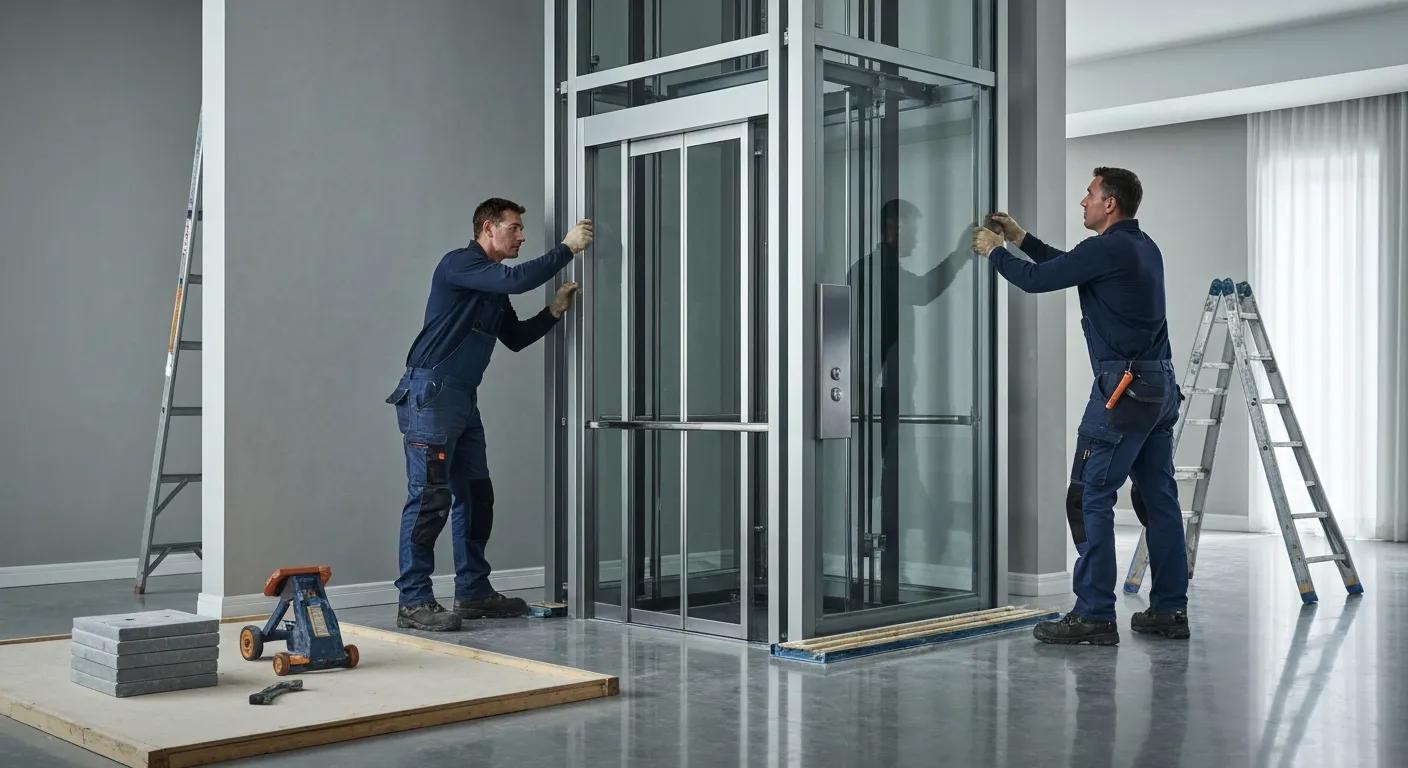
Installation follows a predictable sequence: site assessment and engineering, permit acquisition, structural and electrical preparation, elevator installation and finishing, then final inspections and commissioning. A thorough initial assessment checks shaft or pit needs, load paths, structural reinforcement, and electrical capacity—this defines scope and timeline. Permit and plan-review times vary by jurisdiction and often require detailed drawings and equipment specifications; involving your chosen installer early helps prevent permit delays. Timelines range from a few days for through-the-floor installs to several weeks for full hoistway installations that include structural work. Knowing the stages up front helps you plan for disruption, budget contingencies, and coordinate contractors and inspectors efficiently.
- Site assessment and engineering review: 1–2 weeks for design and measurements.
- Permit submission and approval: 2–6 weeks depending on locality.
- Structural and electrical prep: 1–3 weeks for pits, hoistways, or panel upgrades.
- Elevator unit delivery and installation: 1–7 days for modular installs; longer for custom cabs.
- Inspections, commissioning, and handover: 1–2 weeks to finalize approvals and testing.
This timeline outlines the main phases and leads into the specific structural and electrical requirements that most often determine scope and cost.
What Are the Structural and Electrical Requirements for Installing a Home Elevator?
Structural needs differ by elevator type. Pit depths range from none for shaftless or pneumatic units to several inches or feet for hydraulic models; through-the-floor lifts need minimal vertical space but must align with floor framing and load paths. Hoistway clearances depend on cab dimensions and travel; MRL and traction systems require space for rails and guide assemblies. Electrical requirements typically include dedicated circuits, voltage matched to the drive (often 220V for higher-power drives), emergency power or battery backups for safe lowering, and correct grounding and control wiring. A structural engineer should verify the building can handle static and dynamic elevator loads; precise dimensions and electrical specs from manufacturers form the basis for permit drawings and contractor bids. Solid structural and electrical preparation minimizes change orders and keeps the schedule on track.
How Long Does Installation Take and What Permits Are Needed?
Installation time depends on complexity. Modular shaftless or vacuum units often install in 2–7 days once site prep and permits are final, while full hoistway or hydraulic installs that need pit excavation and structural reinforcement can take several weeks. Permits commonly require manufacturer drawings, structural calculations for load paths, electrical schematics, and code compliance documentation (for example, ASME or regional equivalents). Inspections typically occur after structural work, at electrical rough-in, and at final commissioning—inspector availability can affect timing. Working with installers experienced in local codes and permitting reduces delays and helps keep the project on schedule.
How Can Home Elevators Improve Accessibility and Increase Property Value?
Home elevators offer clear accessibility benefits—enabling aging-in-place, lowering fall risk on stairs, and making caregiver tasks easier—while also affecting marketability and resale value when well integrated. Wheelchair-accessible elevators usually need larger cabs, reinforced floors, and controls positioned for seated users, which makes daily living safer and more dignified for people with mobility impairments. From a resale view, elevators that blend with a home’s design and meet code and inspection standards can be promoted as universal-design upgrades, appealing to multi-generational buyers and households valuing long-term accessibility. Exact value uplift varies by market, but carefully executed installations that match neighborhood expectations and finish level typically improve appeal and can recoup a meaningful share of the installation cost at sale.
What Mobility Solutions Do Home Elevators Offer for Elderly and Disabled Users?
Home elevators support several mobility needs: wheelchair users require wide doors, low thresholds, and sufficient turning radius; older adults with balance or mobility issues benefit from smooth acceleration, handrails, non-slip flooring, and emergency lowering systems; caregivers appreciate easy door operation and controls accessible from both seated and standing positions. Training on safe operation, emergency procedures, and basic troubleshooting is important for long-term safety, and routine maintenance ensures dependable performance—especially when the elevator is used daily. Specifying features that match user needs during selection (rather than retrofitting later) delivers the best accessibility outcomes and minimizes costly changes after installation.
How Much Can a Home Elevator Increase Your Property’s Market Value?
An elevator’s impact on resale value depends on local market expectations, comparables, integration quality, and a clean record of code compliance and maintenance. In some areas, universal-design upgrades like elevators increase usable square footage and attract buyers willing to pay a premium for multi-level accessibility; conservative estimates suggest modest to moderate uplift that varies widely by location. Key factors include how naturally the elevator fits the home’s architecture, whether the feature aligns with buyer demand in your neighborhood, and whether you can produce inspection certificates and maintenance records. Present the elevator as a safety and accessibility improvement, backed by documented service history, to help buyers appreciate its value and potentially speed saleability.
That wraps up our practical guide to choosing, installing, and living with a home elevator. For tailored estimates or to compare manufacturer offerings, contact certified local providers who can match elevator type, features, and budget to your home’s structural realities and accessibility goals.
Frequently Asked Questions
What maintenance is required for home elevators?
Routine maintenance keeps a home elevator safe and reliable. Schedule annual or semiannual inspections with certified technicians to test safety systems—emergency lowering, door interlocks, brakes—and to lubricate moving parts, inspect cables or belts, and verify electrical components. Keep a detailed service log for compliance and resale. Skipping maintenance risks costly repairs and safety issues, so proactive care is essential.
Can home elevators be installed in existing homes?
Yes. Many elevator types can be retrofitted into existing homes, though complexity and cost depend on the structure and the chosen system. Shaftless and pneumatic elevators are often the easiest retrofits because they need less structural work. Hydraulic and traction systems may require a hoistway or pit. A professional installer can assess your layout and recommend the most practical solution.
What are the energy efficiency benefits of modern home elevators?
Modern elevators include efficiency features that cut electricity use. Low-energy LED lighting, sleep modes, and regenerative drives that recapture energy during descent are common. These improvements lower operating costs and reduce environmental impact, making energy-efficient elevators a sensible long-term choice.
How do I choose the right elevator capacity for my needs?
Select capacity based on intended use and future needs. Wheelchair users generally need larger cabs—often rated for at least 1,000 pounds. For general household use, consider the combined weight of occupants plus items like groceries or furniture. Plan for potential future needs and consult a specialist to confirm the right rating and cab size.
What safety features should I prioritize in a home elevator?
Prioritize core safety systems: emergency lowering and battery backup, door interlocks, and an overspeed governor. These features are often code-mandated and essential during power loss or mechanical issues. Obstruction sensors, handrails, and non-slip flooring add important everyday safety. Evaluate features by how they improve safety and usability.
How can I ensure my home elevator complies with local regulations?
Work with certified installers familiar with local building codes and inspection processes. Obtain required permits before work begins and supply manufacturer drawings and structural calculations as requested. Regular inspections during and after installation verify compliance. Keep all compliance and maintenance records for future inspections and resale.
What are the advantages of smart technology in home elevators?
Smart features boost convenience, safety, and uptime. App-based controls, remote diagnostics, and predictive maintenance alerts let you monitor the elevator remotely and catch issues early. These tools reduce downtime and can lower long-term service costs. Smart integrations can also improve energy use by optimizing operation around usage patterns.
Adding a home elevator improves accessibility and can increase a property’s appeal when chosen and installed thoughtfully. By understanding types, realistic 2025 costs, essential safety features, and brand/service considerations, you’ll be equipped to choose a solution that fits your needs and budget. Focus first on capacity and safety, then refine finishes and smart options to match lifestyle and resale goals. Reach out to certified local providers to get personalized estimates and move forward with confidence.
 Madison Heights, MI