When to Choose a Temporary Wheelchair Ramp Rental in Detroit
April 14, 2026
Roll-In Showers for Wheelchairs in Detroit: What Homeowners Should Know
April 28, 2026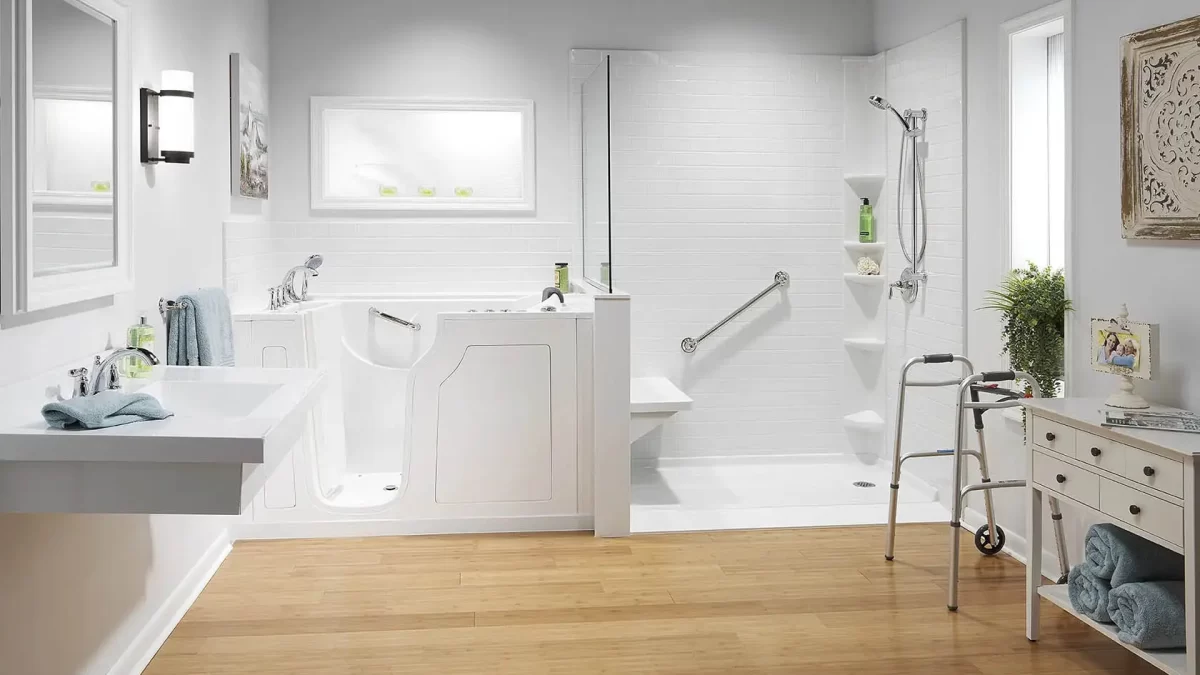
A bathroom should support comfort, privacy, and safer daily use. For people who use wheelchairs, walkers, or other mobility equipment, that support becomes even more important. A standard bathroom layout may look fine at first, but it can create daily obstacles when space is tight, surfaces are slippery, or fixtures are hard to reach.
That is why many families start looking into wheelchair-accessible bathroom remodeling in Detroit when a bathroom no longer meets everyday needs. The goal is not only to update the room. The goal is to make the space easier to use, safer to move through, and better suited for long-term accessibility.
The best accessible bathroom features are those that improve functionality in real life. They help with entry, turning space, transfers, bathing, toilet access, and sink use. They can also help caregivers provide support more safely.
Not every accessible bathroom remodel will look the same. The right layout depends on the user, the room size, and the level of support needed each day. Still, several key features often make the biggest difference.
Below are the top features to include when planning wheelchair accessible bathroom remodeling in Detroit.
1. A wider and more open bathroom layout
One of the first things to look at in any accessible bathroom is space.
A wheelchair user needs room to move, turn, and approach fixtures without feeling boxed in. In many older bathrooms, the layout is simply too tight. The toilet may sit too close to the vanity. The doorway may feel narrow. The floor space in front of the sink may not be enough for a wheelchair to pull in comfortably.
An accessible bathroom remodel should create a more open layout whenever possible. That can mean removing obstacles, repositioning fixtures, or rethinking how the room flows from the doorway to the shower, toilet, and sink.
This matters because even the best accessibility products will not work well if the room is too cramped to use them properly.
2. A wheelchair-friendly doorway
The bathroom entrance is one of the most overlooked parts of the room.
If the doorway is too narrow, daily access becomes harder before the person even gets inside. A remodel may need to address the doorway width to make the entry feel smoother and more practical for a wheelchair or walker.
In some homes, the door swing itself also creates problems. A traditional swinging door can take up valuable maneuvering space in a small bathroom. In those cases, a different door setup may improve access and reduce crowding near the entrance.
A bathroom that is supposed to be accessible should feel easier to enter, not harder.
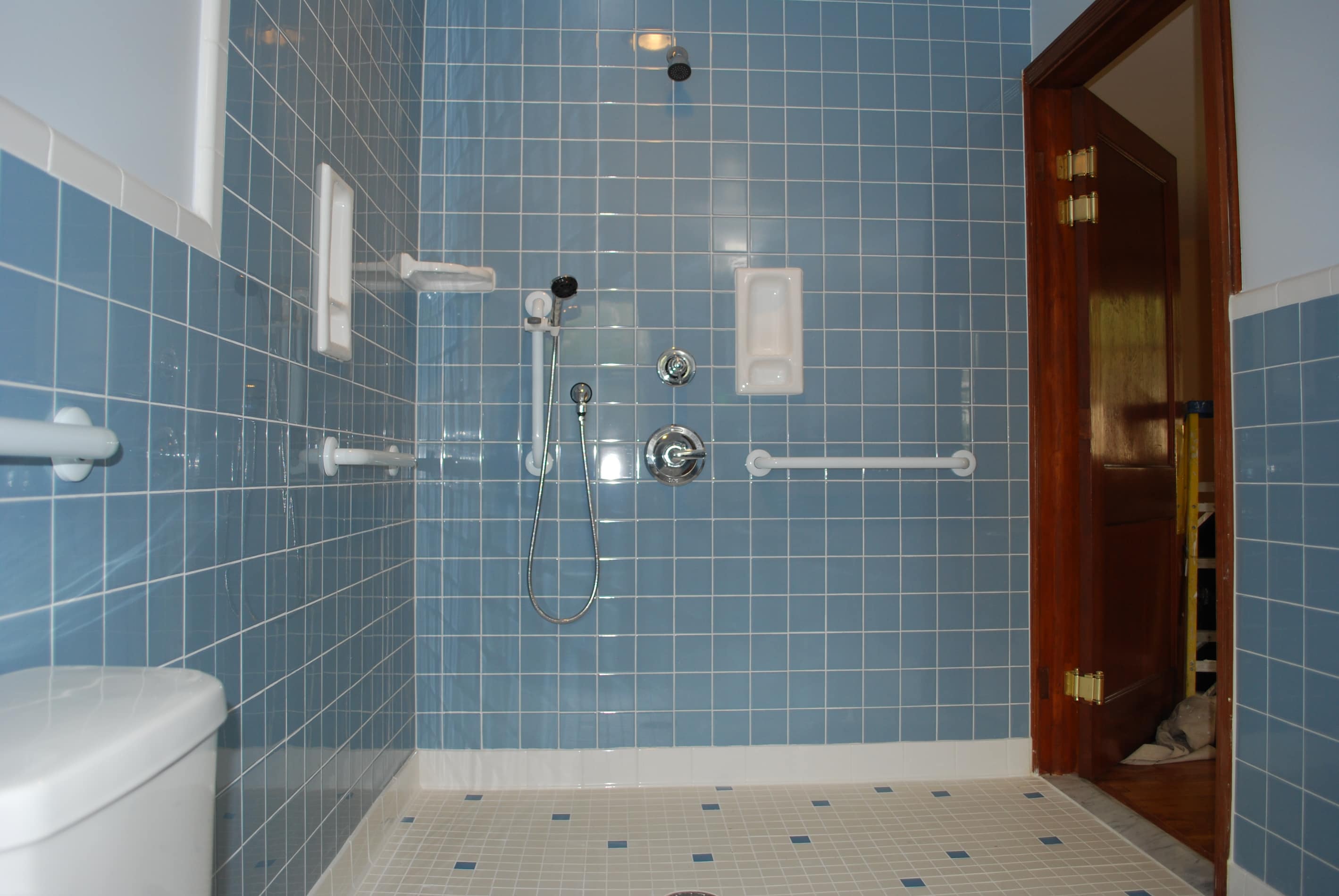
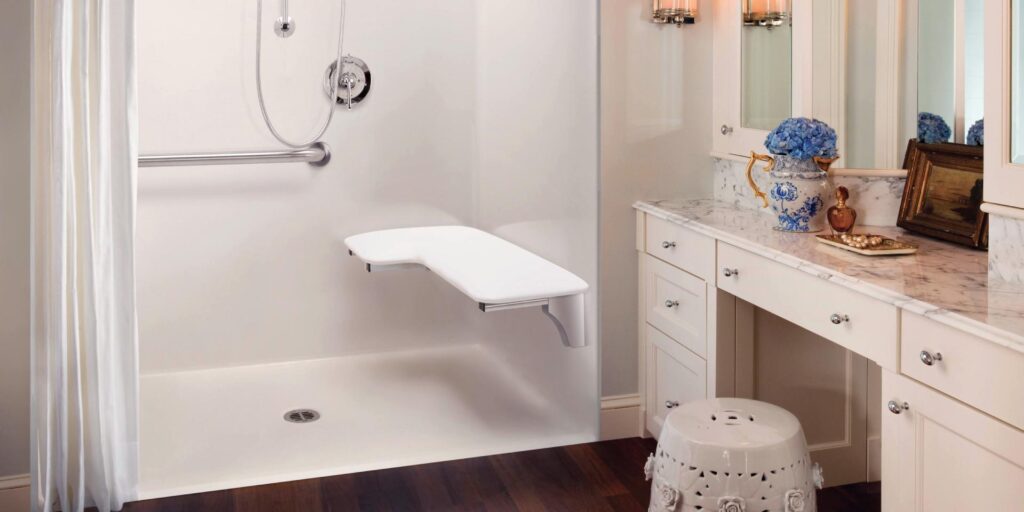
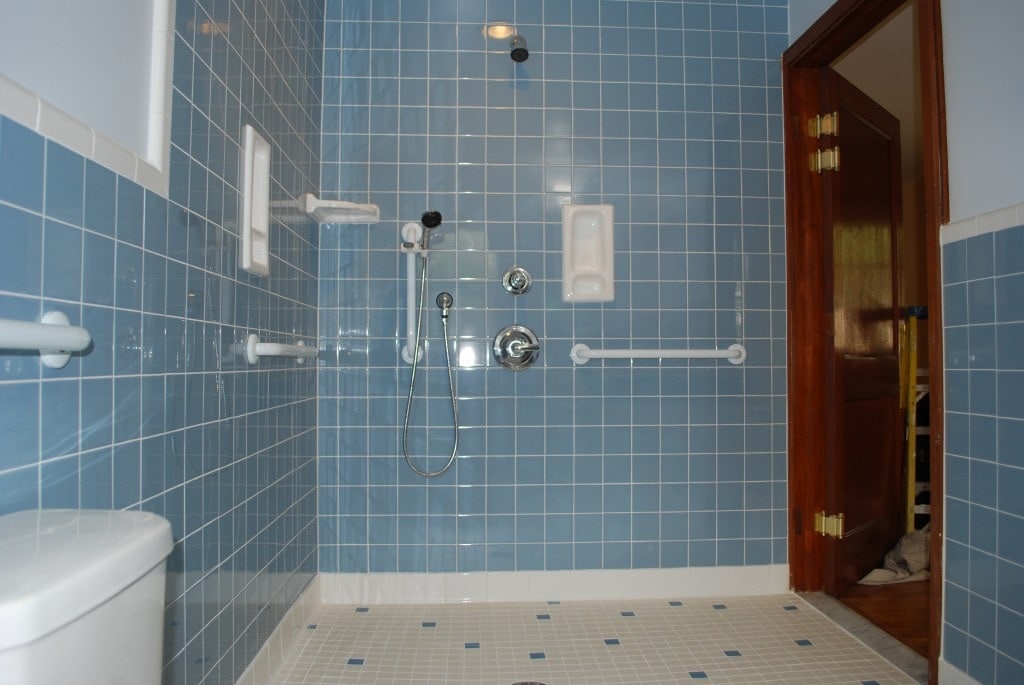
3. A curbless or low-threshold shower
One of the most important features of wheelchair-accessible bathroom remodeling in Detroit is the shower design.
Stepping over a high tub wall or raised shower curb can be difficult and risky. A curbless or low-threshold shower creates a smoother transition into the bathing area and helps reduce trip hazards.
This kind of setup is useful not only for wheelchair users but also for people using walkers, those with limited leg strength, and anyone who needs caregiver support during bathing.
A better shower entry can help make daily routines feel more manageable. It can also make the bathroom feel less stressful for both the user and the family.
4. Enough shower space for mobility needs
Accessible showers should not only be easy to enter. They should also have enough interior space to function well.
A shower that is technically accessible at the opening but too cramped inside may still be hard to use. The person may need room for a wheelchair approach, a shower chair, or caregiver assistance. They may also need better reach to controls, grab bars, and storage areas.
This is why shower size matters. During a remodel, it helps to think beyond just getting through the opening. The full bathing experience should feel stable, usable, and practical.
5. Grab bars in the right locations
Grab bars are one of the most valuable features in an accessible bathroom.
They can help with balance, transfers, and general support as you move through the room. But location matters just as much as having the bars themselves.
A well-planned bathroom may include grab bars near the toilet, inside the shower, and at entry points where extra support is needed. These bars should be positioned based on real use, not added as an afterthought.
In wheelchair-accessible bathroom remodeling in Detroit, grab bars are often among the simplest upgrades with one of the biggest effects on safety.
6. A roll-under or accessible sink area
A standard vanity can block wheelchair access if there is not enough knee and leg room underneath.
That is why many accessible bathrooms benefit from a sink area that allows a better forward approach. A roll-under or more open sink design can make it easier for the user to get close enough to wash hands, brush teeth, and handle daily grooming tasks.
This feature also works best when paired with reachable controls, accessible mirror placement, and thoughtful storage nearby.
The sink should be a usable part of the room, not a barrier.
7. Accessible faucet controls
Small details can create big frustrations in daily use.
Faucet controls that are hard to grip or twist may be difficult for people with reduced hand strength, limited range of motion, or arthritis. That is why accessible faucet choices matter in a bathroom remodel.
A more user-friendly faucet can make daily routines easier and reduce strain. It also supports greater independence, one of the main goals of accessible bathroom design.
When families plan wheelchair-accessible bathroom remodeling in Detroit, easy-to-use controls are often one of the features that improve comfort every single day.
8. A comfort-height or better-positioned toilet area
Toilet access is a major part of bathroom usability.
A bathroom may need a better toilet setup to support safer transfers and an easier approach from a wheelchair or walker. In some cases, the fixture height matters. In others, the bigger issue is the amount of clear space around the toilet.
If the toilet is boxed in too tightly, it can be much harder to use safely. A remodel may involve repositioning nearby elements or choosing a setup that gives the user more practical side access and support.
A more accessible toilet area can make a major difference in both independence and the need for caregiver assistance.
9. Reinforced walls for future support features
Some accessible features need a strong wall backing to be installed properly.
Even if the family is not adding every support feature right away, reinforcing certain wall areas during a remodel can be a smart step. It allows the bathroom to adapt more easily if needs change later.
This matters because accessibility needs often evolve. A bathroom that works today may need added support in the future. Planning for that now can make later upgrades much simpler.
Wheelchair-accessible bathroom remodeling in Detroit often works best when it supports both current needs and potential future changes.
10. Slip-resistant flooring
Bathroom floors can become dangerous quickly when water is involved.
For wheelchair users, walkers, and caregivers, slick flooring increases the risk of slips, instability, and difficulty with movement. Choosing slip-resistant flooring is one of the most important safety upgrades in an accessible bathroom.
The floor should feel stable underfoot and under wheels. It should also work well with the room’s overall layout, especially near the shower, sink, and toilet.
A beautiful floor is not enough. It should also support safer movement every day.
11. Better turning space
Turning space is essential in a wheelchair-accessible bathroom.
The user should be able to enter the room, reposition, and move between fixtures without constant struggle. If the space is too tight to turn comfortably, the room may feel frustrating, no matter how updated it looks.
Creating better turning space may require changing fixture placement or reducing bulky elements that crowd the room. In some cases, that may be one of the biggest structural priorities in the remodel.
This feature is not flashy, but it has a major effect on real-world function.
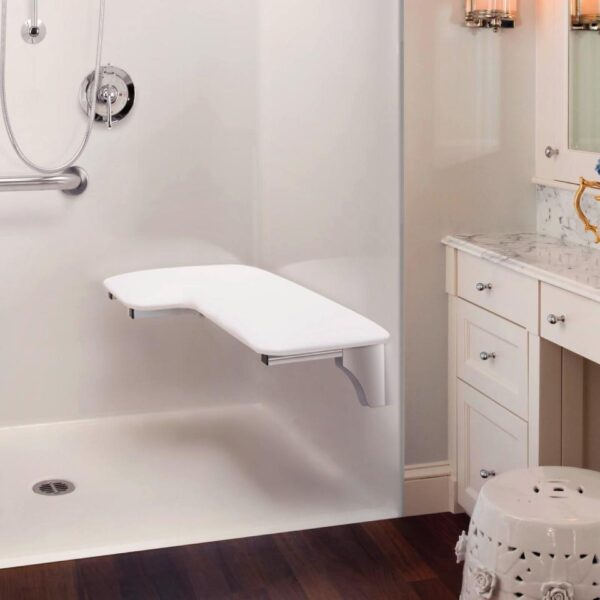
12. A shower seat or built-in seating option
For many users, standing through a full shower is impractical or unsafe.
A shower seat or built-in seating option can make bathing easier and more stable. It can also reduce fatigue and help support transfers. This is especially helpful for people with limited balance, lower-body weakness, or mobility limitations related to recovery.
When planned correctly, seating becomes a natural part of the shower design instead of something added later that feels temporary or awkward.
13. Handheld shower components
A handheld shower setup can add flexibility and ease of use in an accessible bathroom.
It can help the person direct water more comfortably while seated and assist caregivers during bathing support. This kind of feature works especially well in curbless showers and other accessible bathing layouts.
It is one of those upgrades that may seem simple, but it can greatly improve day-to-day comfort.
14. Better lighting throughout the bathroom
Lighting is often underestimated in accessibility planning.
A well-lit bathroom is easier to navigate, easier to clean, and safer to use. Shadows, dim corners, and poorly lit shower areas can make daily routines harder than they need to be.
Good lighting helps with visibility around the toilet, vanity, and bathing area. It also supports safer movement for users with visual limitations or balance concerns.
In many bathroom remodels, improved lighting enhances safety and overall comfort.
15. Storage that is easier to reach
Accessible bathrooms should also make daily items easier to reach.
If towels, personal care products, or cleaning supplies are stored too high or too low, the room becomes less practical to use. A remodel can include better storage placement so the user can access needed items more easily.
That may mean rethinking cabinet height, shelf placement, or how items are organized near the sink and shower.
The goal is to reduce strain and make the bathroom easier to use without unnecessary reaching or awkward movement.
16. A layout that supports caregiver assistance
Not every accessible bathroom is used by a single person.
In many homes, a family member or caregiver helps with bathing, transfers, or mobility support. That means the bathroom should have enough space and the right layout to allow safe assistance.
If the room is too cramped for a second person to help, daily care becomes harder for everyone involved. Planning for caregiver movement can be just as important as planning for wheelchair access.
This is one reason why accessible bathroom remodeling should be based on how the space is actually used each day.
17. Lower stress, safer daily routines
One of the most important features in any accessible bathroom is not a product. It is the way the room works as a whole.
When the right features come together, the bathroom feels easier to use. Transfers feel more stable. Bathing feels less difficult. The user has a clearer path through the room. Caregivers have more room to assist. Daily routines become less stressful.
That is the real goal of wheelchair accessible bathroom remodeling in Detroit. It is not just to update surfaces. It is to create a bathroom that fits the user better and supports safer, more comfortable living.
How to choose the right features for your bathroom
Not every bathroom needs every upgrade.
The best remodel starts with the person’s actual needs. Think about how they enter the room, where they struggle most, whether transfers are difficult, how bathing is handled, and whether support needs may increase over time.
Some homes may need a full layout change. Others may benefit most from a new shower, grab bars, better flooring, and a more accessible sink area.
The right features are those that solve real, daily problems.
Why planning matters in wheelchair accessible bathroom remodeling in Detroit
Good planning helps avoid costly mistakes and frustrating layouts.
If accessibility is treated as a checklist rather than a real use issue, the remodel may miss the features that matter most. A bathroom can look modern and still function poorly if the spacing, entry, or fixture placement does not support the user.
That is why it helps to think through the full routine:
- entering the bathroom
- closing the door
- approaching the sink
- using the toilet
- entering the shower
- moving safely on wet surfaces
- storing and reaching everyday items
When those actions are considered early, the finished bathroom is more likely to work well.
The best features to include in wheelchair-accessible bathroom remodeling in Detroit are those that improve safety, functionality, and everyday ease of use. A wider layout, better turning space, a curbless shower, grab bars, slip-resistant flooring, accessible sink design, and a more usable toilet area can all make a meaningful difference.
The most effective bathroom remodel is not about adding random upgrades. It is about creating a space that matches the user’s mobility needs and supports daily routines with less strain and less risk.
For families planning accessibility improvements, focusing on the right features from the start can lead to a bathroom that feels more practical, more comfortable, and far better suited for long-term use.
FAQs
1. What is the most important feature in wheelchair accessible bathroom remodeling in Detroit?
One of the most important features is a layout that provides sufficient space for wheelchair movement, turning, and access to fixtures. Without enough space, other upgrades may be harder to use.
2. Why is a curbless shower important in an accessible bathroom?
A curbless shower helps reduce entry barriers and makes bathing safer and easier for wheelchair users, people with walkers, and those who need caregiver assistance.
3. Do grab bars really make a big difference?
Yes. Grab bars can provide added support near the toilet, in the shower, and in other key areas where balance and transfers matter.
4. Can a small bathroom still be remodeled for wheelchair access?
Yes, but the design needs careful planning. In smaller bathrooms, layout changes and smart feature selection are especially important.
5. What should families focus on first in wheelchair accessible bathroom remodeling in Detroit?
Families should focus first on the user’s daily challenges, including entry, turning space, shower access, toilet use, sink access, and overall safety.

Introducing Kevin Olrich, Owner of CAPS Remodeling. As a trusted expert in the field of barrier free remodeling Kevin brings a compassionate approach to create safer, more comfortable, and independent living conditions for the elderly and disabled throughout the State of Michigan. His leadership and experience is at the core of how CAPS provides the best solutions to meet the unique needs of our customers and medical professionals.