
Roll-In Showers for Wheelchairs in Detroit: What Homeowners Should Know
April 28, 2026
Winter Wheelchair Ramp Safety for Aging in Place
May 11, 2026
Why Ramp Length Matters for Safer Home Access
A wheelchair ramp may look simple from the outside, but its length plays a major role in how safe and comfortable it feels every day.
If a ramp is too short, the slope can become too steep. That can make it hard for a wheelchair user to move up the ramp without strain. It can also make the ramp feel unsafe when going down.
If a ramp is planned with the right length, the slope feels smoother. The entry becomes easier to use. Family members, caregivers, and visitors can also move through the space with more confidence.
That is why many homeowners start with a wheelchair ramp length calculator. It provides a basic idea of how much ramp space may be needed based on the entry height.
A calculator is a helpful starting point, but it should not be the only step. The final design also depends on the home layout, available yard or porch space, door swing, landing area, user needs, and local requirements.
What Is a Wheelchair Ramp Length Calculator?
A wheelchair ramp length calculator estimates the length of a ramp based on the vertical rise.
Vertical rise means the height from the lower ground surface to the upper entry point. For example, if the porch floor is 24 inches above the driveway or sidewalk, the ramp must cover that 24-inch rise at a safe slope.
Most calculators use a simple formula:
Ramp length = rise × slope ratio
A common accessibility guideline is a 1:12 slope. That means 1 inch of rise needs 12 inches of ramp run. The U.S. accessibility standards describe ramp slope as a ratio, such as 1:12, and note that ramp runs must meet specific slope and cross-slope limits for accessible routes.
Using that basic ratio, a 24-inch rise would need about 24 feet of ramp run.
That does not always mean the ramp will be one long straight line. In many homes, the ramp may need turns, platforms, or switchback sections to fit the available space.
How to Measure the Rise for a Wheelchair Ramp
The first step in using a wheelchair ramp length calculator is measuring the rise.
Start at the upper landing point. This is usually the door threshold, porch surface, deck surface, or garage entry.
Then measure straight down to the lower surface where the ramp will begin. This lower surface may be a driveway, sidewalk, garage floor, patio, or yard.
The measurement should be vertical, not angled. Do not measure along the steps. Do not measure from the front of the porch to the ground at a slant.
For the most accurate number, use a level and a tape measure. Place the level on the upper surface, then measure straight down to the lower ground surface.
For example:
If the porch is 18 inches above the sidewalk, the rise is 18 inches.
If the garage entry is 7 inches above the garage floor, the rise is 7 inches.
If the front door threshold sits 30 inches above the walkway, the rise is 30 inches.
Once you have the rise, you can use it to estimate ramp length.
Basic Wheelchair Ramp Length Formula
The most common residential planning formula is:
Rise in inches × 12 = ramp length in inches
Then divide that number by 12 to convert inches into feet.
Here is a simple example.
A home entry has a 20-inch rise.
20 × 12 = 240 inches
240 inches ÷ 12 = 20 feet
So, a 20-inch rise may require about 20 feet of ramp run at a 1:12 slope.
A 1:12 running slope is often used as a maximum slope in accessibility standards for ramps, and the U.S. Access Board explains that a running slope is the slope in the direction of travel.
This formula is useful, but it does not include every part of the project. Landings, turns, handrails, surface material, drainage, and available space also matter.
That is where a professional assessment from CAPS Remodeling can help turn the calculator estimate into a safe and practical ramp plan.
Wheelchair Ramp Length Examples for Common Home Heights
Here are examples showing how ramp length can vary with the rise.
A 6-inch rise may need about 6 feet of ramp run.
A 12-inch rise may need about 12 feet of ramp run.
An 18-inch rise may need about 18 feet of ramp run.
A 24-inch rise may need about 24 feet of ramp run.
A 30-inch rise may need about 30 feet of ramp run.
A 36-inch rise may need about 36 feet of ramp run.
These examples are based on the 1:12 ratio. They are helpful for early planning, but every home is different.
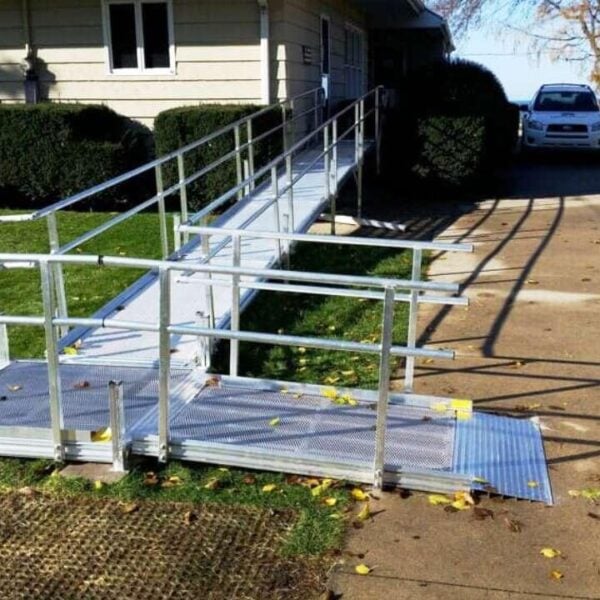
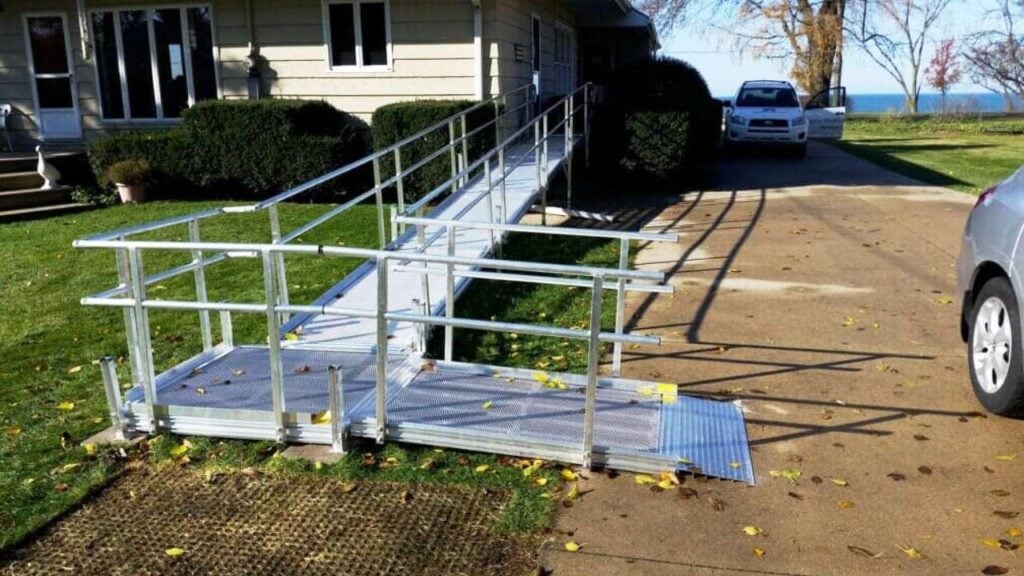
A short rise at a garage entry may be easily addressed with a straight ramp. A taller front porch may need a longer ramp with a turn. A raised deck may need a switchback layout to keep the ramp within the available space.
This is why homeowners often search for a wheelchair ramp length calculator before calling a contractor. It helps them understand the amount of space involved before the design process begins.
Why a Ramp May Need More Space Than Expected
Many homeowners are surprised when they calculate ramp length for the first time.
A 3-foot porch height sounds small, but a 36-inch rise can require about 36 feet of ramp run at a 1:12 slope.
That does not include landings.
Landings are flat areas placed at the top, bottom, and sometimes between ramp sections. They give wheelchair users space to rest, turn, open doors, and move safely between surfaces.
Accessibility standards include requirements for ramp landings, and landings are especially important where ramps change direction or connect to doors.
In real home layouts, the ramp may also need space for:
Turning areas
Door clearance
Handrails
Edge protection
Drainage
Snow and rain management
Walkway connections
Vehicle access
Porch or deck connections
Because of these details, the calculated ramp run is only part of the total space needed.
Straight Ramp vs. Turned Ramp
A straight ramp is the simplest layout. It runs directly from the lower surface to the upper entry.
This can work well when there is plenty of open space. It may be useful for a garage entry, a side entrance, or a long walkway.
However, many homes do not have enough space for a single, long, straight ramp. A front yard may be too short. A driveway may be in the way. Landscaping, sidewalks, steps, or property lines may limit the available area.
In those cases, a turned ramp may work better.
A turned ramp may be L- or U-shaped. It uses landings to change direction while keeping the slope manageable.
A switchback ramp is another option. This design folds the ramp back on itself, allowing a longer ramp to fit into a smaller area.
The right layout depends on the home, the user, and the available space.
Do You Always Need a 1:12 Ramp Slope?
A 1:12 slope is a common standard used when planning accessible ramps. It is often the number used in a wheelchair ramp length calculator.
For many homeowners, this is a good starting point.
However, some situations may call for a gentler slope. A gentler slope can make the ramp easier to use, especially for someone who uses a manual wheelchair or has limited upper-body strength.
For example, a 1:16 or 1:20 slope needs a longer ramp, but it can feel easier to travel.
Here is how that changes the planning:
A 24-inch rise at 1:12 may need about 24 feet of ramp run.
A 24-inch rise at 1:16 may need about 32 feet of ramp run.
A 24-inch rise at 1:20 may need about 40 feet of ramp run.
A longer ramp can feel smoother, but it also needs more space. That is why it is helpful to balance comfort, safety, property layout, and budget before deciding on the final ramp design.
Why Doorways and Thresholds Matter
The ramp does not lose its importance once it reaches the door.
The doorway itself must also be easy to use. A ramp leading to a tight landing or high threshold may still pose a daily challenge.
Before planning a ramp, look at the entry door.
Does the door swing outward or inward?
Is there enough room to stop safely before opening the door?
Is the threshold raised?
Will a wheelchair user need space to turn?
Is the landing deep enough?
Can a caregiver stand nearby if needed?
These questions matter because the ramp must connect smoothly to the home. A good ramp design should not leave the user stuck at the door or forced to balance on a slope while opening it.
CAPS Remodeling can help homeowners consider the entire entry area, not just the ramp length.
Ramp Width and Clear Space
Length is one of the most important measurements, but width matters too.
A ramp should be wide enough for safe wheelchair movement. It should also allow space for hands, wheels, and assistance when needed.
Many accessibility standards address the clear width between handrails, and ramp handrail guidance includes height and clearance details to ensure safer use.
In a home setting, the right width may depend on the wheelchair or mobility device, caregiver support, and the entry layout.
A ramp that feels too narrow can be stressful to use. A ramp with poor turning space can also make daily movement more difficult.
That is why a ramp plan should consider the user’s equipment and routine.
Handrails and Edge Protection
Ramp length and slope are only part of the safety picture.
Handrails can give users and caregivers extra support. They are especially useful on longer ramps, ramps with turns, and ramps exposed to weather.
Edge protection can also help reduce the risk of wheels slipping off the ramp edge.
For outdoor ramps, these details become even more important. Rain, ice, snow, and leaves can affect traction. A ramp should be planned with a safe surface material and proper water drainage.
Handrails, landings, and surface choices all work together to make the ramp more usable.
Outdoor Ramp Planning for Michigan Homes
Outdoor ramps need to handle changing weather.
Rain can make some surfaces slick. Snow can build up along ramp edges. Ice can create major safety risks. Wind can also affect users on exposed ramps.
A good ramp plan should consider how the ramp will perform throughout the year.
That may include:
Slip-resistant surfaces
Proper drainage
Safe handrail placement
Room for snow removal
Strong materials
Stable support
Clear lighting near the entry
A wheelchair ramp length calculator can estimate ramp size, but it cannot judge weather exposure or drainage. Those details should be reviewed during the planning stage.
Temporary Ramp vs. Permanent Ramp
Some homeowners need a ramp for short-term recovery. Others need a long-term home access solution.
A temporary ramp may be useful after surgery or during a short recovery period. However, it still needs to be safe, stable, and properly sized.
A permanent ramp is often better for aging in place, long-term mobility needs, or a home where accessibility will remain a priority.
Permanent ramps can be designed to better match the home. They may also include better landings, railings, turns, and material choices.
For many families, a permanent ramp becomes part of a larger accessibility plan that may include grab bars, bathroom safety updates, handrails, lifts, or other home modifications.
When a Ramp May Not Be the Best Option
A ramp is a great solution for many homes, but it is not always the right answer.
If the rise is very high, the ramp may become too long for the available space. For example, an entry that is 60 inches above grade may need about 60 feet of ramp run at a 1:12 slope, plus landings.
That may not fit well on the property.
In that case, other accessibility options may be worth reviewing. Depending on the home and user needs, CAPS Remodeling may discuss lifts, home elevators, or entry changes.
The goal is not just to install a ramp. The goal is to create safer access that fits the home and the person using it.
Common Mistakes When Calculating Ramp Length
One common mistake is measuring along the stairs rather than the vertical rise.
The height difference between the lower and upper surfaces should determine the ramp length.
Another mistake is forgetting landings. A calculator may estimate ramp run, but the full layout needs flat spaces at key points.
Some homeowners also choose a ramp that is too steep to save space. This can make the ramp harder to use and less safe.
Another issue is placing the ramp where water collects. Poor drainage can lead to slippery surfaces and faster wear.
Finally, some ramps are planned without thinking about the doorway. If there is not enough room to open the door safely, the ramp may not solve the access problem.
How CAPS Remodeling Helps With Wheelchair Ramp Planning
A wheelchair ramp length calculator can give you a number. CAPS Remodeling can help turn that number into a working plan.
The process starts with understanding the home, the entry point, and the person who will use the ramp. The right ramp for one home may not be right for another.
CAPS Remodeling looks at the rise, available space, slope, landing needs, materials, and daily use. The team can also review whether a straight ramp, a turned ramp, or another access solution makes the most sense.
Homeowners looking for can use a calculator as a first step, then work with CAPS Remodeling to plan a safer and more practical installation.
This helps avoid guesswork and gives the homeowner a clearer path forward.
How to Prepare Before Requesting a Ramp Estimate
Before contacting CAPS Remodeling, gather a few details.
Measure the rise from the lower surface to the entry point.
Take note of the entry location. Is it the front door, side door, garage, porch, or deck?
Look at the available space. Is there room for a straight ramp, or would the ramp need to turn?
Think about who will use the ramp. A manual wheelchair user may have different needs than someone using a power chair, walker, or scooter.
Consider whether the ramp will be used daily or only occasionally.
Check the surface at the bottom of the ramp. A ramp should connect to a stable, usable path.
These details can help guide the conversation and make the planning process smoother.
Simple Ramp Length Calculation You Can Try
Here is a simple way to estimate ramp length at home.
First, measure the rise in inches.
Second, multiply that number by 12.
Third, divide the result by 12 to convert it into feet.
The shortcut is simple: for a 1:12 slope, the number of inches of rise is usually equal to the number of feet of ramp run.
So, if the rise is 10 inches, start by thinking about 10 feet of ramp run.
If the rise is 28 inches, start by thinking about 28 feet of ramp run.
If the rise is 42 inches, start by thinking about 42 feet of ramp run.
Then remember that landings and turns may add more total space.
This estimate gives you a starting point, not the final design.
Why Professional Ramp Design Is Worth It
A ramp affects daily movement, safety, and independence.
When well-designed, it can make the home easier to enter and exit. It can reduce stress for family members and caregivers. It can also support aging in place and help the home fit changing mobility needs.
When poorly designed, it can create new problems. It may be too steep, too narrow, hard to turn on, slippery, or poorly connected to the doorway.
A wheelchair ramp length calculator is helpful because it shows why ramp length matters. Professional planning is important because it considers the entire access route.
CAPS Remodeling helps homeowners plan ramp solutions that fit the home, the user, and the way the space is used every day.
A wheelchair ramp length calculator is a useful starting tool for understanding ramp size. It helps homeowners estimate how much ramp run may be needed based on the entry height.
The most common starting point is the 1:12 slope ratio, which means 1 inch of rise for every 12 inches of ramp run. That simple formula can quickly show whether a ramp may fit in the available space.
Still, ramp planning does not stop with the calculator.
Landings, turns, doorway clearance, handrails, traction, weather, and user comfort all affect the final design. A ramp should feel safe, stable, and easy to use.
For homeowners who want safer access, CAPS Remodeling can help turn rough measurements into a practical ramp plan that supports everyday mobility.
FAQs
How do I calculate the length of a wheelchair ramp?
To calculate wheelchair ramp length, measure the vertical rise in inches and multiply it by the slope ratio. A common starting point is 1:12, which means 1 inch of rise needs about 12 inches of ramp run. For example, a 24-inch rise may need about 24 feet of ramp run, not including landings or turns.
Is a wheelchair ramp length calculator always accurate?
A wheelchair ramp length calculator gives a helpful estimate, but it does not account for every detail. Your home layout, doorway clearance, landings, handrails, drainage, and available space can all affect the final ramp design. It is best to use the calculator as a starting point and then have the space reviewed by CAPS Remodeling.
How long should a ramp be for 3 steps?
The answer depends on the height of each step. If each step is 7 inches high, 3 steps would create a 21-inch rise. Using a 1:12 slope, that may call for about 21 feet of ramp run, plus any needed landings. Measuring the actual rise is the best way to estimate the right ramp length.
Can a wheelchair ramp be too steep?
Yes, a wheelchair ramp can be too steep. A steep ramp may be hard to climb, difficult to control on the way down, and unsafe in wet or icy weather. A longer ramp with a gentler slope is often easier and more comfortable to use.
Does CAPS Remodeling install wheelchair ramps?
Yes, CAPS Remodeling provides wheelchair ramp solutions for safer home access. The team can review your entry, measure the rise, look at the available space, and help plan a ramp layout that fits your home and mobility needs.

Introducing Kevin Olrich, Owner of CAPS Remodeling. As a trusted expert in the field of barrier free remodeling Kevin brings a compassionate approach to create safer, more comfortable, and independent living conditions for the elderly and disabled throughout the State of Michigan. His leadership and experience is at the core of how CAPS provides the best solutions to meet the unique needs of our customers and medical professionals.